

Basement Waterproofing Everett
Basement waterproofing in Everett for seasonal floor water on Snohomish River delta and older port-area lots when groundwater rises and perimeter drains clog through the wet season — inspection first, then drainage scoped to the wet map.


Engineering-first, NDS-certified drainage
In a wet year the groundwater here can climb right up under the floor, and a lot of older houses still drain through clay tile that silted up decades ago. We find out which one is flooding your basement, then lay out an NDS-certified drainage system to carry the water off. Our crews come from Lynnwood, and you get a scope only after we have looked at the house.
Three signs we see in local basements
Pick the one that looks most like yours.
Why older and low-lying lots take on water
Most calls we get here come from two kinds of houses: low lots near the Snohomish River and the Lowell delta, and older homes around Port Gardner that still rely on their original clay drain tile. We figure out which problem you have before anyone digs.
Basement waterproofing Everett jobs, the way we use the term, are about getting a basement room you use dry again. Sealing the foundation itself down at the footing is a separate service, and there is a link to it further down if that is what your house needs.
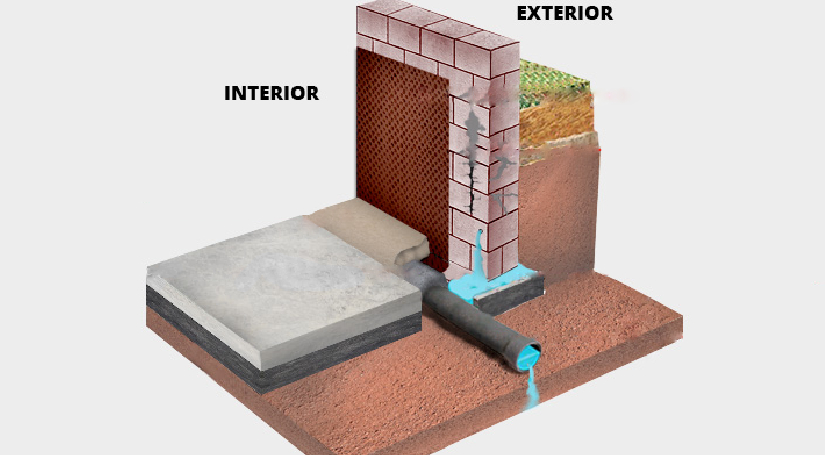
A multi-day storm raises the water table on the delta and on the old port blocks. The water comes up through the cold joint where the floor meets the wall, around pipes, and along drain lines that clogged with silt long ago. If your pump only runs hard after a few weeks of steady rain, you are dealing with groundwater, not an overflowing gutter.
Where the floor gets wet tells us a lot. Water in the middle of the slab that follows the rainy season is pushing up from below. A damp edge along the footing, with dry walls above it, usually means the old perimeter drain is clogged or was never connected. White crust on the concrete is another clue. When we find both problems, we fix them in order instead of selling you a coating.
Every system we install is laid out on the drainage systems hub, and the Field Manual guides at the bottom of this page go deeper on water coming up through the floor.

Four reasons the floor keeps getting wet
We check each of these on the visit, because most wet basements in town have more than one.
Seasonal water-table rise. After weeks of rain, the ground under delta fill gets saturated and the water rises toward the slab. You see it as a wet floor or a seeping floor joint late in the season, not after one shower.
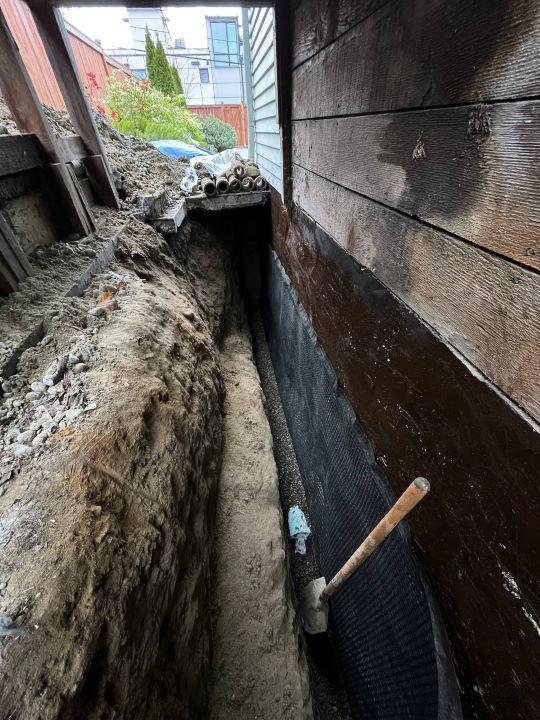
Clogged or untied perimeter laterals. The clay tile on many older homes is full of silt, and some lines were never hooked up right in the first place. The water that should drain away sits at the joint between wall and floor. A drain inside can keep the room dry. If a wall is leaking badly, digging outside may still be the better fix.
Port-era grade and fill. Many older lots near the port sit on mixed fill with very little slope. When the water has nowhere to drain off the property, it soaks back into the same spot every winter.
Sump and discharge fighting the table. Too small a pit, no backup power, or a line that empties onto soaked ground, and the pump ends up moving the same water around in circles. We size the pit and pump and run the line far enough that the water stays gone.
If you want the longer explanation, our Field Manual covers hydrostatic pressure after PNW rain and water on the basement floor after rain.
The three ways we fix it
Which one fits depends on whether the water comes up through the floor, in at a clogged footing drain, or both. Some houses need two.
Interior drainage & sump
A drain under the edge of the slab feeding a sump. The usual choice when water comes up through the floor, or when there is no room to dig outside.
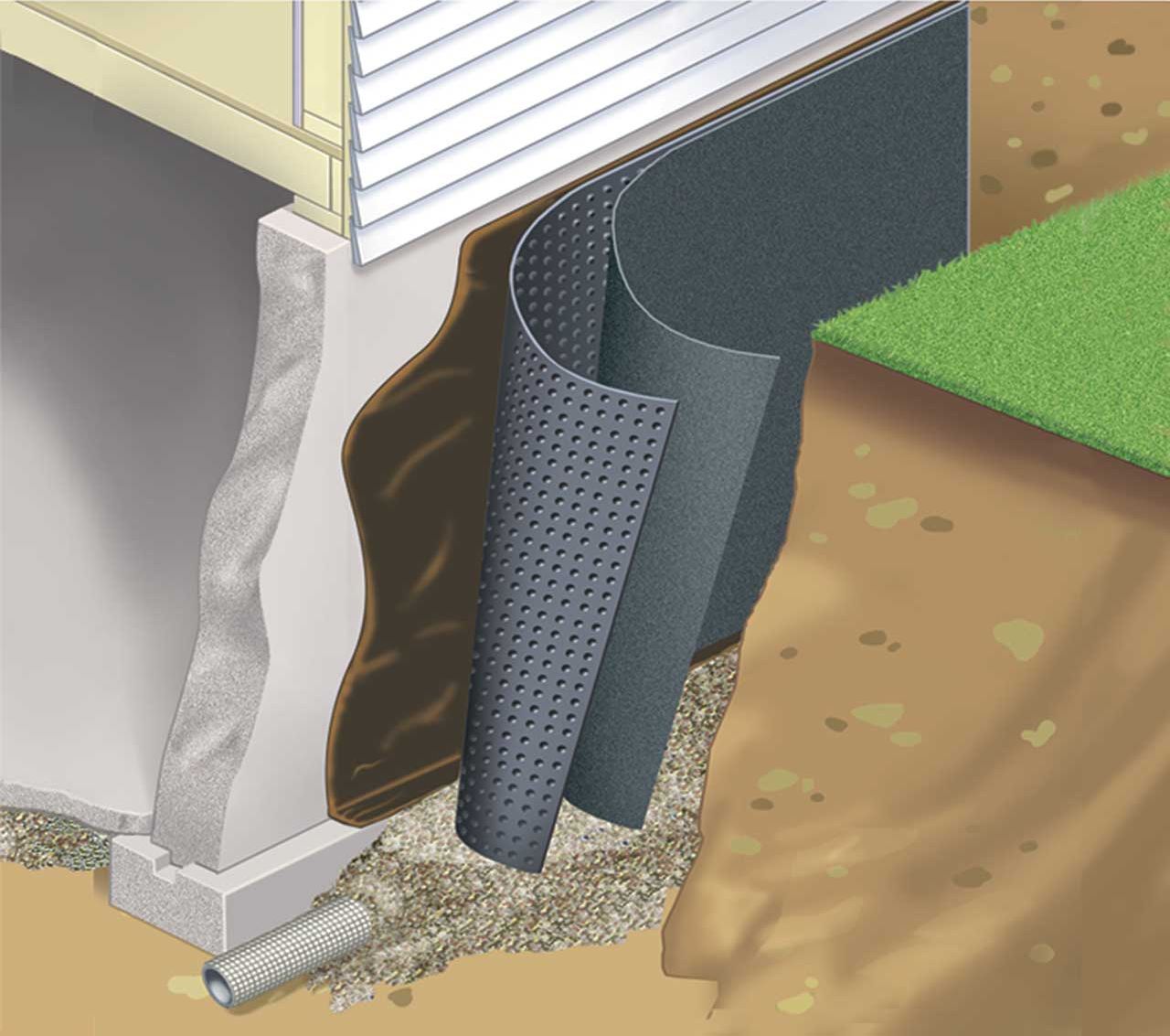
Exterior membrane & drain tile
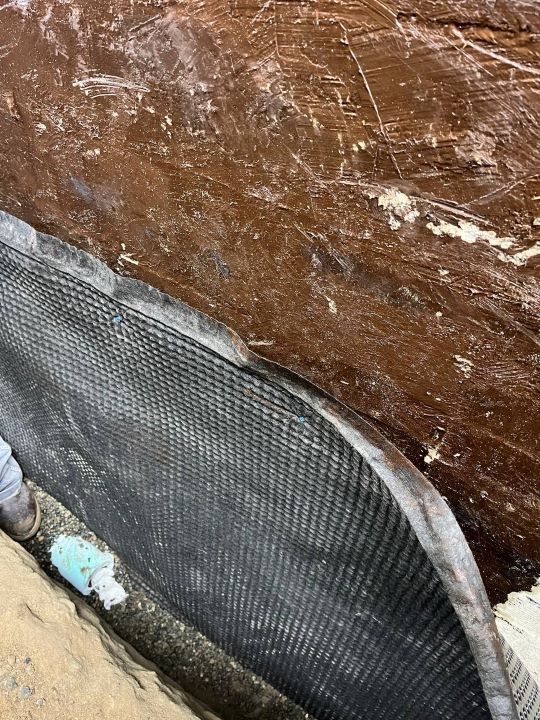
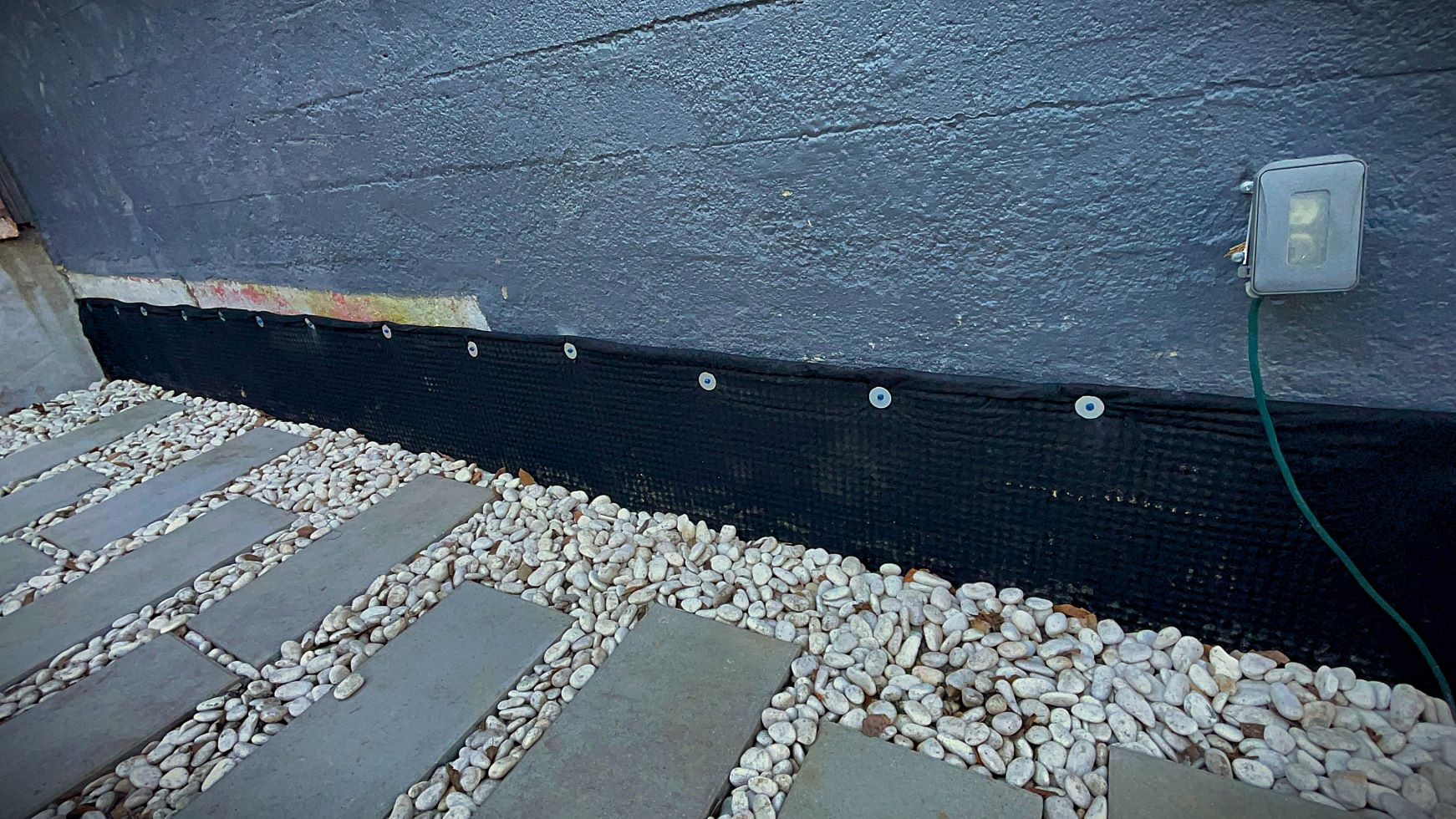
We dig down, put new drain tile at the footing, and seal the outside of the wall. Worth it when an old clogged drain or a leaking wall needs fixing at the source and there is room to work.
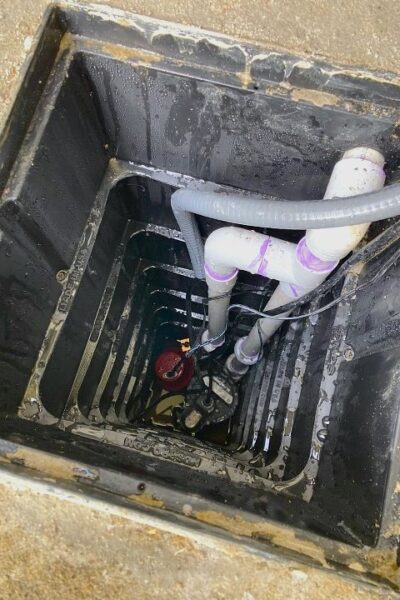
Sump & discharge fixes
A bigger pit, backup power, or a better discharge line for a pump that struggles once the rain settles in.
What we look at on the visit
We do not walk in with one product to sell. We look at when the water shows up and what shape the old drains are in, then recommend only what your house needs.
On a typical visit we check where the gutters and downspouts empty, how the yard slopes, where the floor gets wet and when, the old perimeter drain where we can reach it, any floor drains and the sump, and whether there is room to dig if a wall is the problem. You get a clear scope that says inside, outside, sump, or a mix, and what each part is meant to fix.
The money we most often see wasted is on paint-on sealers and crack injection done without a drainage plan. If water pressure is pushing up through the floor, drainage comes first. If one wall leaks and we can dig, fixing it from outside may last longer. If a driveway, a patio, or the property line is in the way, an inside system usually does the job.
Basement waterproofing in Everett gets scoped after we see where the water comes in, never before. If what the house really needs is a dig and a membrane down at the footing, to protect the foundation itself rather than dry a room, we will point you to that service instead.
Basement living space vs footing-level membrane
This page is for wet basement living space — floors, odor, seasonal groundwater, clogged perimeter drains, and drainage that keeps the room dry. Footing-level exterior membrane and structural footing drainage are scoped separately so homeowners get the right crew and the right dig.
Neighborhoods we commonly serve
Groundwater is a common thread across town, but the fix still depends on the house, not the zip code.
We work regularly along the Snohomish River and in Lowell, on the older blocks near Port Gardner, around Silver Lake, and in Cascade View and Pinehurst. The 1970s to 1990s houses around Silver Lake often sit on hardpan that holds water under the slab, while a low basement by the river usually needs a bigger sump than a house up the hill. We tell you that before the work starts.
Browse all markets on our service areas page.
Nearby cities for the same service
The same basement drainage work, close by.
Also serving Lynnwood, Marysville, and Mill Creek all get the same service, run out of our Lynnwood office.
Common questions
Quick answers before you book.
Why does my floor get wet again every winter? Weeks of rain raise the groundwater under the house until it pushes through the floor. When that is the cause, a drain under the slab works and a coating does not.
Does an old clogged drain mean digging up the yard? Not always. Often the bigger problem turns out to be water coming up through the floor, or it is both. We fix things in the order the house needs.
Will an inside drain work if the old tile is plugged? Usually, yes, for keeping the room dry. If a wall is also leaking and there is room to dig, we may add outside work later.
Do you also work in Lynnwood, Marysville, and Mill Creek? Yes. Our Snohomish County jobs all run out of Lynnwood. Read our reviews, then book a visit through contact or call (206) 388-7867.
How much will it cost? It depends on the scope. Sealing one crack costs far less than a full inside system or an outside dig. We give you a price after we see the house.
Field Manual guides
Straight answers from jobs we have done around the region. Worth a read before you decide.
Want to know why your basement is wet? We come out, show you where the water is getting in, and recommend drainage for that path, not a one-size-fits-all fix. Read more in the Field Manual. Call (206) 388-7867.

