

Carbon Fiber Wall Reinforcement
Horizontal cracks and inward bow often call for straps—not another surface seal

Low-profile straps bonded with structural epoxy help lock bowed basement walls when inspection shows movement is still within strap range—not every crack needs steel beams.
Hairline – Minor – Major – Vertical – Diagonal – Horizontal
⭐⭐⭐⭐⭐ 5-Star Rated Repairs | Based On GMB Reviews
Carbon fiber wall reinforcement — Basement Expert · ARTBRL*812B8




What changes when we strap a bowing wall
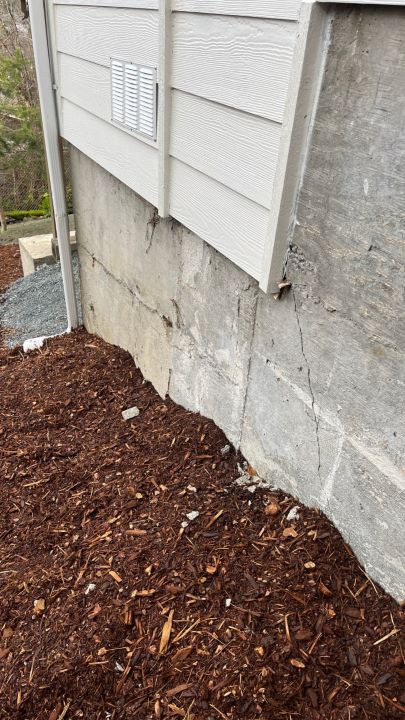
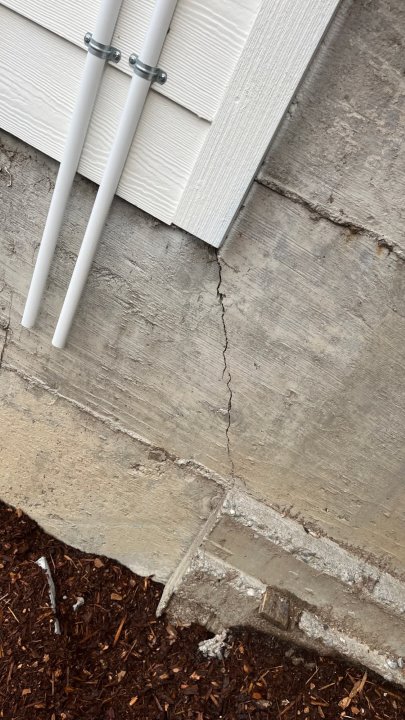
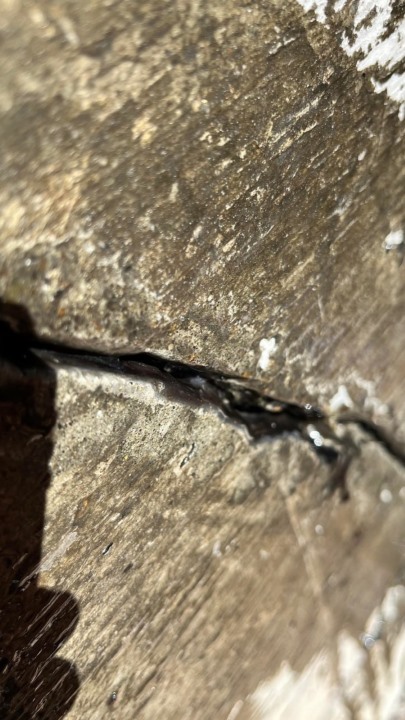
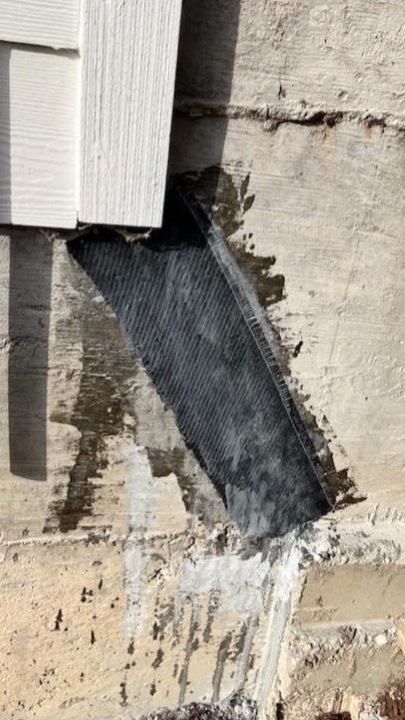
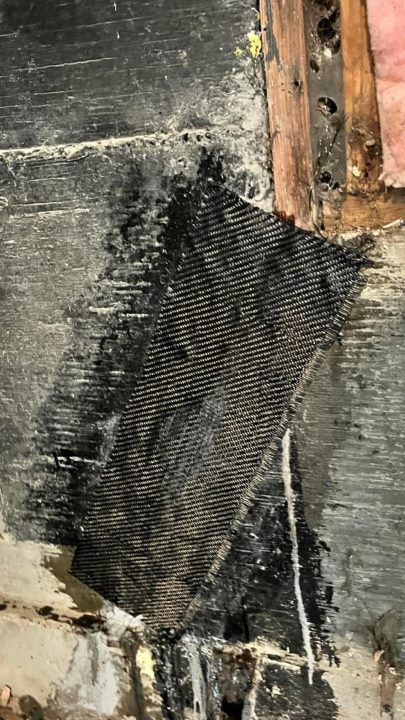
Our engineering-grade carbon fiber systems do more than just hide a foundation crack; they fundamentally change the structural integrity of your foundation. By transitioning a failing, bowing wall from a state of constant stress to one of permanent tension, we halt the destructive cycle of hydrostatic pressure.
In the “Before” phase, you will often see horizontal shearing and inward movement—clear signs that the concrete has reached its breaking point. Left unaddressed, this pressure leads to total wall failure and compromised safety for your entire home.
If the opening is mainly leaking without bow, start on our wall crack repair in Seattle page. Carbon fiber wall reinforcement is for walls that are displacing inward—not every wet hairline.
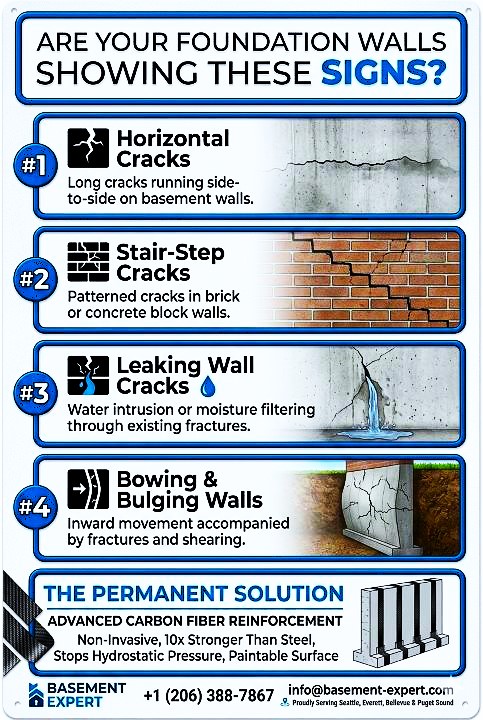
Signs we evaluate before recommending straps
- Horizontal cracks mid-wall or near grade
- Stair-step cracks in block with measurable inward offset
- Bow / lean you can see against a straightedge or laser
- Doors or finishes racking on the same wall plane
We measure crack width, wall deflection, and whether water is riding the same plane. Straps are a tension repair for bow within manufacturer limits—not a substitute for failed exterior drainage or a collapsing wall past the system’s range.
Five steps from wall measurement to documented straps
1. Inspection and Evaluation
2. The 24-Hour Precision Quote
3. Work Schedule
4. Professional Clean-Up & Finishing
5. Post-Project Documentation & Warranty
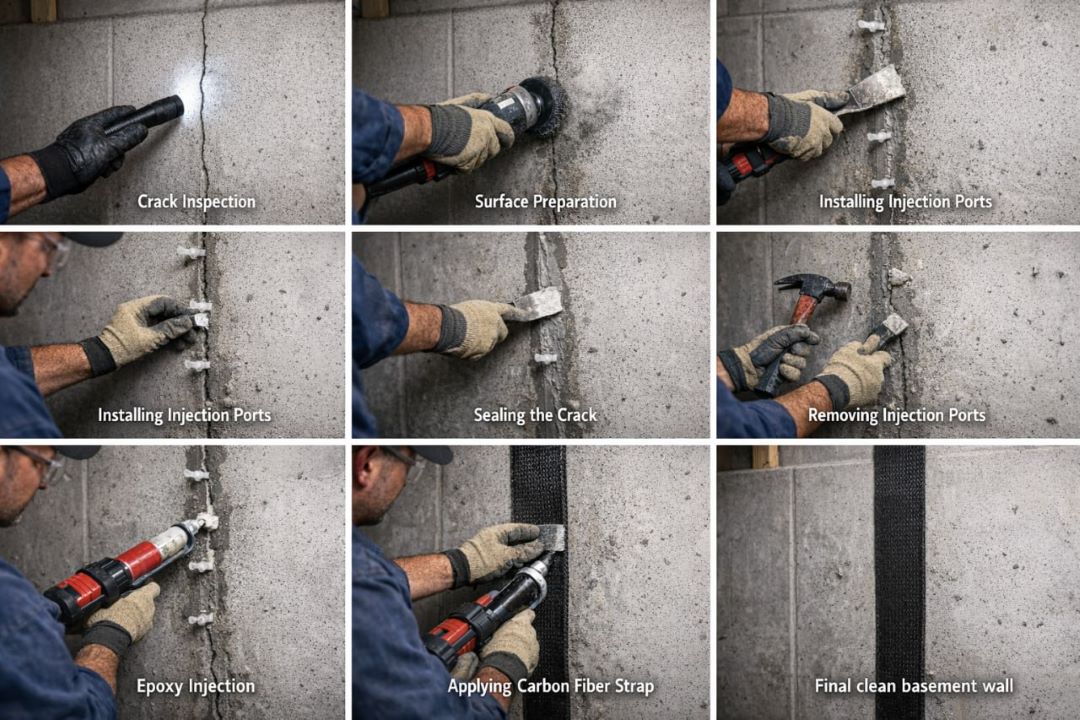
Strap process: prep, bond, document
The concrete surface is mechanically ground using a wire-brush or diamond-cup wheel. This removes laitance and debris, ensuring a clean, porous substrate for maximum adhesive bonding.
Specialized ports are placed at calculated intervals along the crack. These serve as the entry points for the structural resin to reach the center of the wall.
A high-strength epoxy paste is applied over the surface of the crack. This “caps” the fissure, ensuring the injection material stays contained within the wall during the pressure phase.
Once the seal is set and the internal injection is complete, the protruding ports are carefully removed to leave a flush, professional finish.
Using a high-pressure dispensing tool, we inject structural epoxy into the ports. This fills the entire void of the crack from front to back, effectively “welding” the concrete.
A high-tensile carbon fiber strap is saturated with structural adhesive and applied directly over the repaired crack. This provides the lateral strength needed to resist future soil pressure.
The finished application results in a low-profile, permanent stabilization. The wall is now structurally superior to its original state and is ready for paint or finishing.
Straps vs steel I-beams — when each belongs
Low-profile structural straps
Modern wall stabilization
High-tensile straps bond to prepared concrete with structural epoxy, creating a thin tension layer that resists further inward movement. Once cured, the face stays nearly flush—paint or drywall can cover it without losing basement square footage the way beam pockets do.
Steel I-beams
When bulk bracing still wins
Steel beams still make sense on severe deflection, limited bond area, or walls outside strap criteria. They need slab and joist anchorage and typically project into the room. We recommend beams when measurement says straps alone cannot own the load path—not as a default upsell.
Steel braces a wall from the inside face. Bonded straps add tensile capacity across the concrete so the same crack that opened under soil load is less free to widen. Concrete is strong in compression and weak in tension—strap work targets that tensile gap when bowing is still early-to-moderate.
We still refuse cosmetic-only “strap theater”: if exterior water is driving progressive lean, we pair or hand off to drainage and the foundation repair hub scope instead of pretending epoxy alone freezes geology.
Related when the job is not a strap job: basement waterproofing, foundation waterproofing, french drain, and basement floor crack repair when the slab—not the wall—owns the leak.
Catch bowing while straps can still own it
Horizontal cracks and a soft inward lean often get worse after wet seasons. Early measurement tells us whether strap reinforcement is still in range—or whether the wall needs a heavier brace path.
- Stop progressive lean: lock tension across the cracked plane before offsets grow.
- Keep the room usable: thin straps beat protruding beams when criteria allow.
- Document the before/after: photos, measurements, and product data stay with the job file.
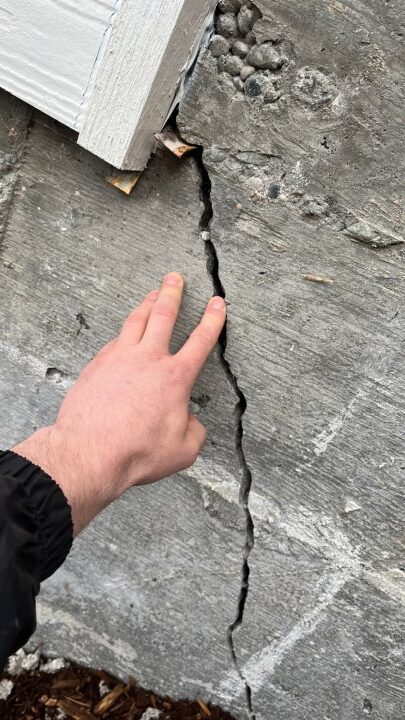
On site we map crack class, measure deflection, check moisture at the wall, and decide strap vs beam vs drainage-first. Injection may seal a wet line, but it does not replace tension capacity when the wall is moving.
For deeper reading on methods and field notes, see the Basement Expert Field Manual — structural guides written for homeowners who want the “why” before they schedule.
Want more detail on structural options?
Where we install wall straps
Wall-strap reinforcement is a specialty under our foundation work—not a city clone of crack-injection pages. We regularly assess bowed basement walls across Seattle-area neighborhoods and nearby King/Snohomish homes with glacial soils and wet-season loads.
Wall crack injection (different intent):
Parent hub: foundation repair. Call (206) 388-7867 · ARTBRL*812B8.
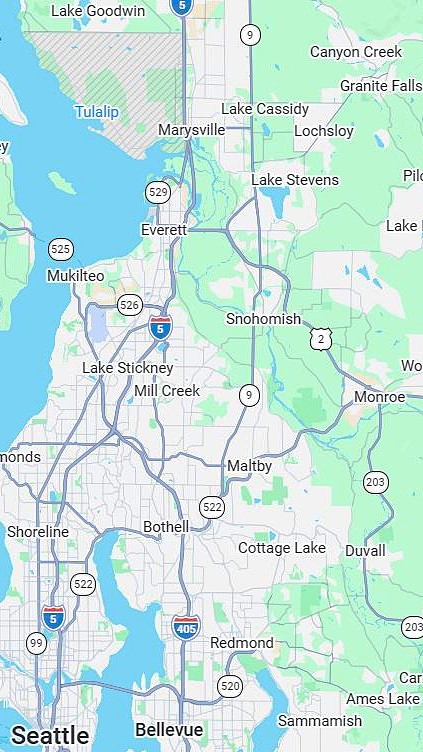
Seeing a horizontal crack or inward lean? Book a wall measurement with Basement Expert — (206) 388-7867.
FAQs: straps, paint, and when steel is better
Does every horizontal crack need straps?
No. Some lines are shrinkage or old settlement with no ongoing bow. We strap when measurement shows inward displacement or risk of progression within the system’s limits.
Can straps cover a wall that still weeps?
We dry and prep bond surfaces first. Active bulk water usually means drainage or waterproofing belongs in the plan—strapping over a chronic weep path is the wrong sequence.
When do you still recommend steel beams?
Severe deflection, poor bond substrate, or loads outside strap criteria. Beams are the honest answer when thin laminates cannot own the geometry.
Will I lose basement width?
Straps stay nearly flush after grind and paint. Beams typically project several inches and need trim or soffits if you finish the room.
How soon can I finish the wall?
After full cure per product data—often about a day or two for coatings/drywall over straps, pending site conditions.

