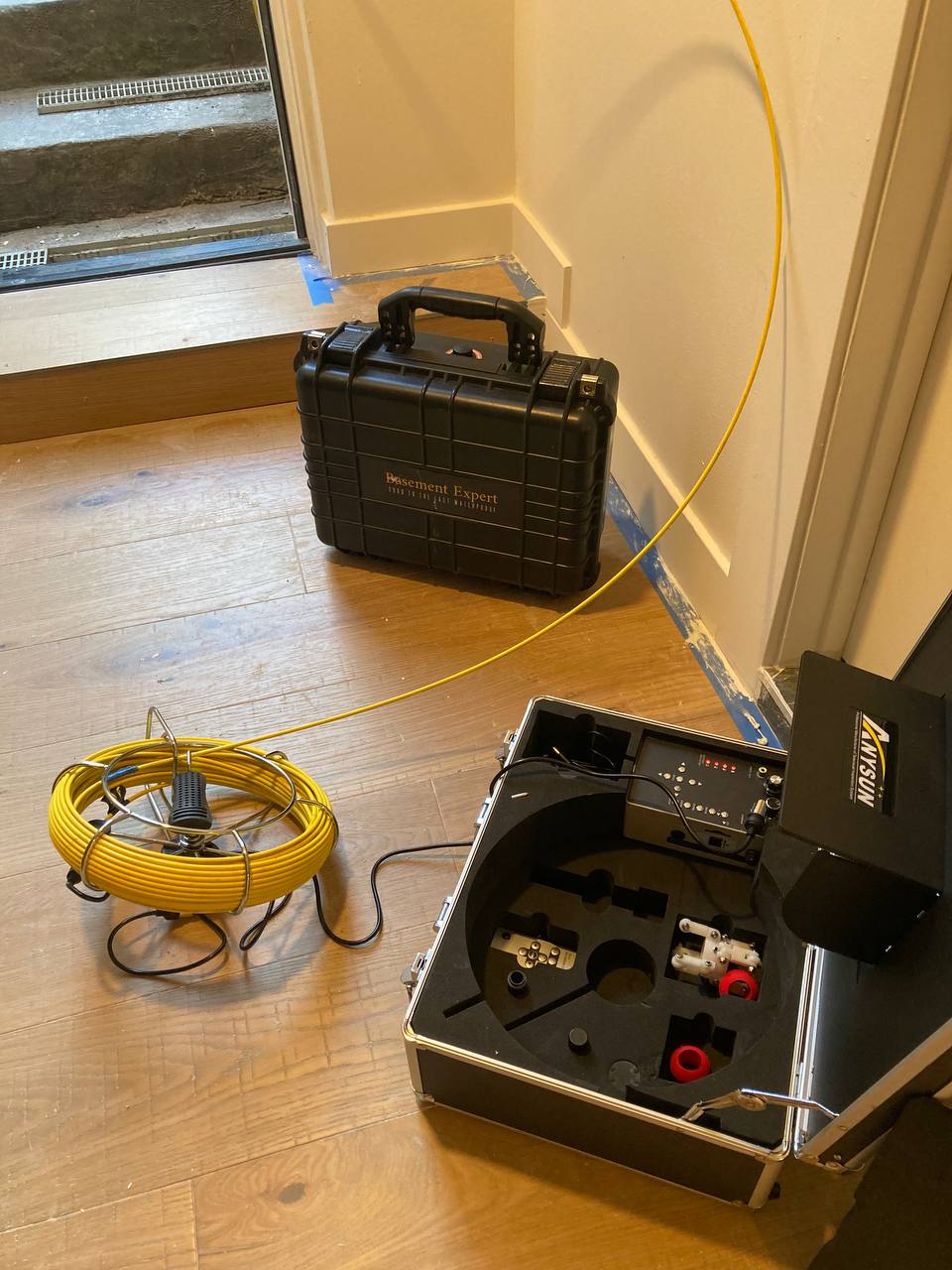
Water in a basement usually shows up after a long stretch of rain or when the water table rises, and it tends to come up through the slab or in at the joint where the wall meets the floor. Once it is on the floor, the cost is more than the water itself: wet finishes, cleanup, and damp air that invites mold.
We size the pump to your basin and inflow after an inspection, so it keeps up and helps prevent flooding before the floor gets wet.
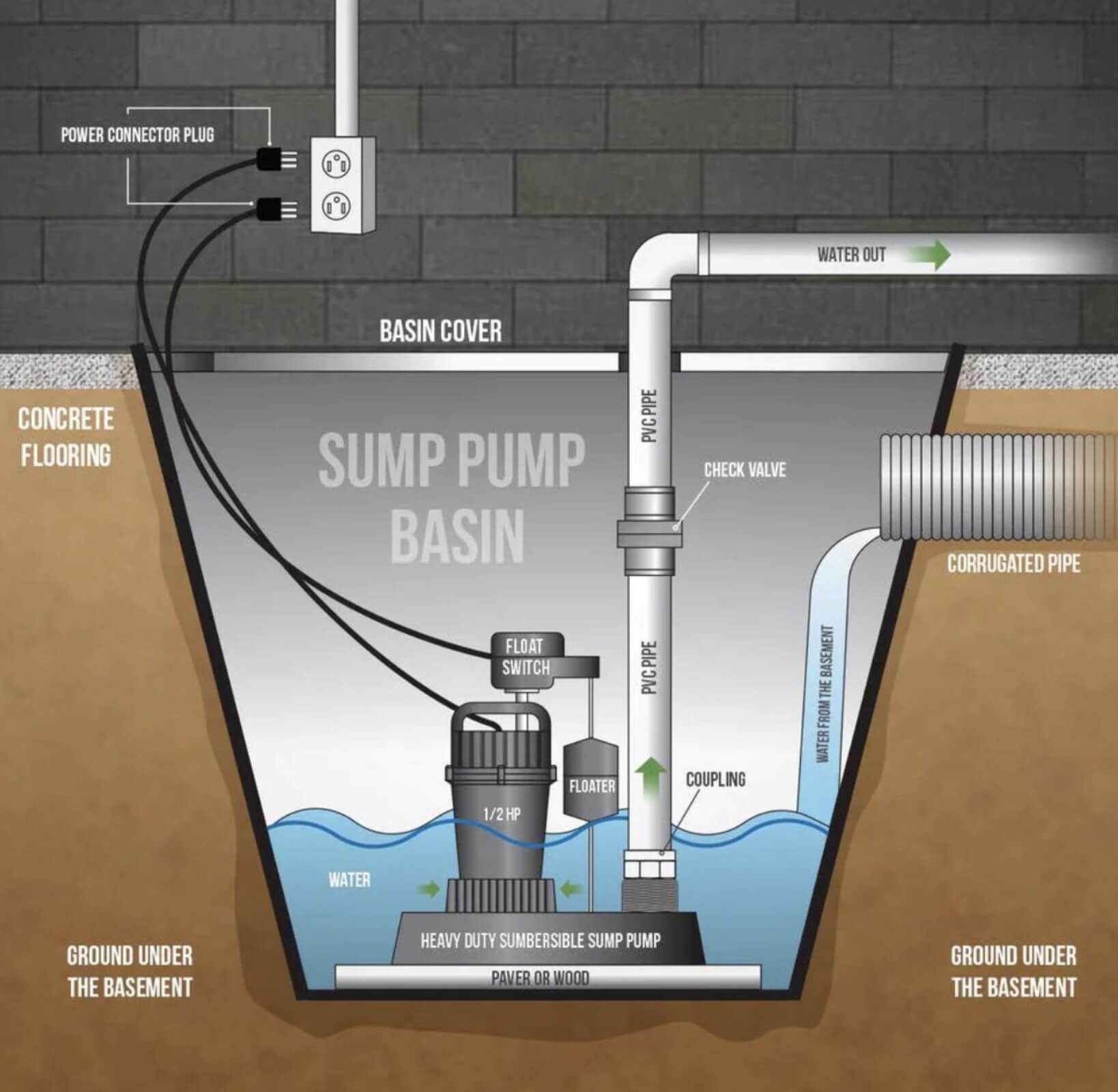
A sump pump moves water from the basement to the outside. A sump is a special pit which is carved below the surface of the basement floor. It is also called a basin where a pump is located. The pump has some valves which react to rising levels of water or hydrostatic pressure.
When the water rises, a pump switches on automatically and starts driving the water away from the basin and your property through a discharge line. Another name for it is an effluent. It connects the sump pump and a specific drainage area. That can be a dry well, pond, or creek. It can also drain the water into the main drainage line or neighboring drain pipes. These designated areas shouldn’t be located closer than 10-20 feet from your home’s foundation or there is a risk of water backup into the basement.
There are special building codes in some areas which determine where the water from your house should be drained. That is why, before installing a sump pump system, it is always better to check all the regulations with your local authorities.
Sometimes, it is essential to connect an extended drainage hose to increase the capacity of the sump pump. So, you need a professional contractor for advice and this work.
Types of Sump Pumps
Selecting the correct type of a pump can be a challenging task. You will need the help of professionals to ensure the safety of your home. Which type fits depends on your basin, how fast water comes in, and how often the power goes out.
Submersible Sump Pumps
This type combines a pump and a motor in one unit. Such appliances are installed inside the basin meaning they are submerged in the water. They have a lot of advantages. They are not too big so such pumps can save space. The items are also quieter than other types and are not clogged often. Their disadvantage is a shorter lifespan. However, submersible pumps are so far the best choice for frequently flooded areas.
Pedestal Pumps
These appliances use a separate pump and motor. The motor is located on a specially designed pedestal above the basin, and a hose runs to the basin with a pump in it. The pump drives the water through this hose and away from the home to the designated area. The motor is not submerged, so its lifespan is longer. Moreover, it is easy to access if there are some maintenance issues. However, it is louder and bigger so it may take much more space than a submersible pump.
Battery Backup Pumps
This solution is very helpful when you need extra security against unpredictable flooding, the main pump failure, or intensive water levels. This pump is equipped with a float switch which makes it possible for such a pump to operate during the electricity blackouts caused by severe winter storms. When the main source of power switches off, the water starts rising in the basin. The float switch is triggered and the battery starts operating independently.
Water-Powered Backup
This appliance uses the increased water pressure which helps drive water away from the basin. The system has a big advantage – there is no need in backup monitoring or replacing batteries. However, using extra water raises the bills significantly. That is why some municipalities do not allow for the installation of these appliances.
Pump Switches
The efficiency of any pump’s performance depends greatly on the type of a switch. The switch triggers the pump independently so it needs to work appropriately.
Here are several types of switches we normally recommend for pump systems:
- Float switch. It is just a float. The item is attached to the pump and is located on the water surface. When water rises because of flooding, the float rises too and starts the pump.
- Electronic switch. There is no moving float. Sensors read the water level in the basin and turn the pump on when it reaches a set point.
- Pressure switch. It senses the weight of the water above it, which goes up as the basin fills. At a set level it turns the pump on.
- Diaphragm switch. A flexible diaphragm pushes in as the water rises and relaxes as it drops, a bit like your own diaphragm when you breathe. With no float arm to catch on the basin wall, it is less likely to stick.
You can also add a high-water alarm. Think of it as the last line of defense: it tells you when the pump has stopped or is falling behind.
Pump’s Characteristics to Consider
There is no sole solution for all the situations. However, while choosing a pump for your home, you can consider the following:
- The power of the appliance needs to be enough to cope with big amounts of flooding water if you live in an area with heavy precipitation or high water table.
- The cost of the appliance should fit perfectly your budget. Include the cost of the pump and its installation to get the real picture of expenses.
- The type of the pump, its size, materials, extra features, and accessories should influence your choice.
- Basement materials also need to be taken into account. If the material is hard and thick, it will take more time and labor to make all the necessary installations.
- Additional drainage may be needed so the installation of the extra drainage lines and / or extension hose may be required.
Installing a pump is not a good DIY project: basin depth, discharge routing and the check valve all have to be right for it to work. We handle pump installs and replacements as part of our basement waterproofing work.
Benefits of a Pump
When you have installed a pump in your home, it will provide you with a lot of benefits. Apart from the overall protection of your house from the consequences of bad weather conditions, it will be beneficial in the following ways:
- It prevents basement flooding and all the damage related to it. Even if the water is just seeping or pooling in your basement, the pump will prevent the long-term damage by diverting excessive moisture from the foundation.
- It protects your basement against mold and mildew. They most often come from standing water. Having them in your basement can cause structural damage alongside health problems, such as allergies or respiratory disorders in your family. A pump eliminates the standing water problem and prevents mildew and mold from growing.
- It does not allow insects and pests to infest your home. When a basement is damp, insects or rodents can be breeding. A pump makes your home dry so such infestations are almost impossible.
- Your electrical appliances will be safe. The excess water in your basement can cause wire damage. Your appliances will be damaged as well and over time, need costly repairs or replacement. Or you may face an electrical shock or fire. All this means that a pump can protect your home and your family from more severe disasters and bring you peace of mind and the feeling of security.
Final Thoughts
If water is getting in and you don’t have a pump yet, or the one you have can’t keep up anymore, it’s worth looking at a new pump installation or a replacement.
On the visit we look at your basin, how fast water comes in, and where the discharge can go, then recommend the pump that fits. We treat your home the way we would treat our own.
To set up an inspection, contact us today.