

Foundation Waterproofing in Normandy Park
Daylight-wall dampness on marine clay—we map the footing joint before we trench.

NDS-Certified Active Drainage Systems

Real Customer Reviews:


When Sheet Flow Hits the Footing Joint First
If a daylight wall in Normandy Park stays damp for days after rain while the slab still looks dry, the load is at the footing joint. Basement Expert does foundation waterproofing in Normandy Park for that joint-and-membrane job—not finished-floor seepage you would send to the basement page.
We start with a moisture map on the daylight face, a probe at the footing reveal, and a grade check along Marine View Drive and Town Center lots. Exterior membrane plus a collector at the footing is the default when the bluff side can be opened. Interior relief is the fallback when the slope, neighbor setback, or a retaining face blocks excavation.
Call (206) 388-7867 if the wall is wet and the floor is not.
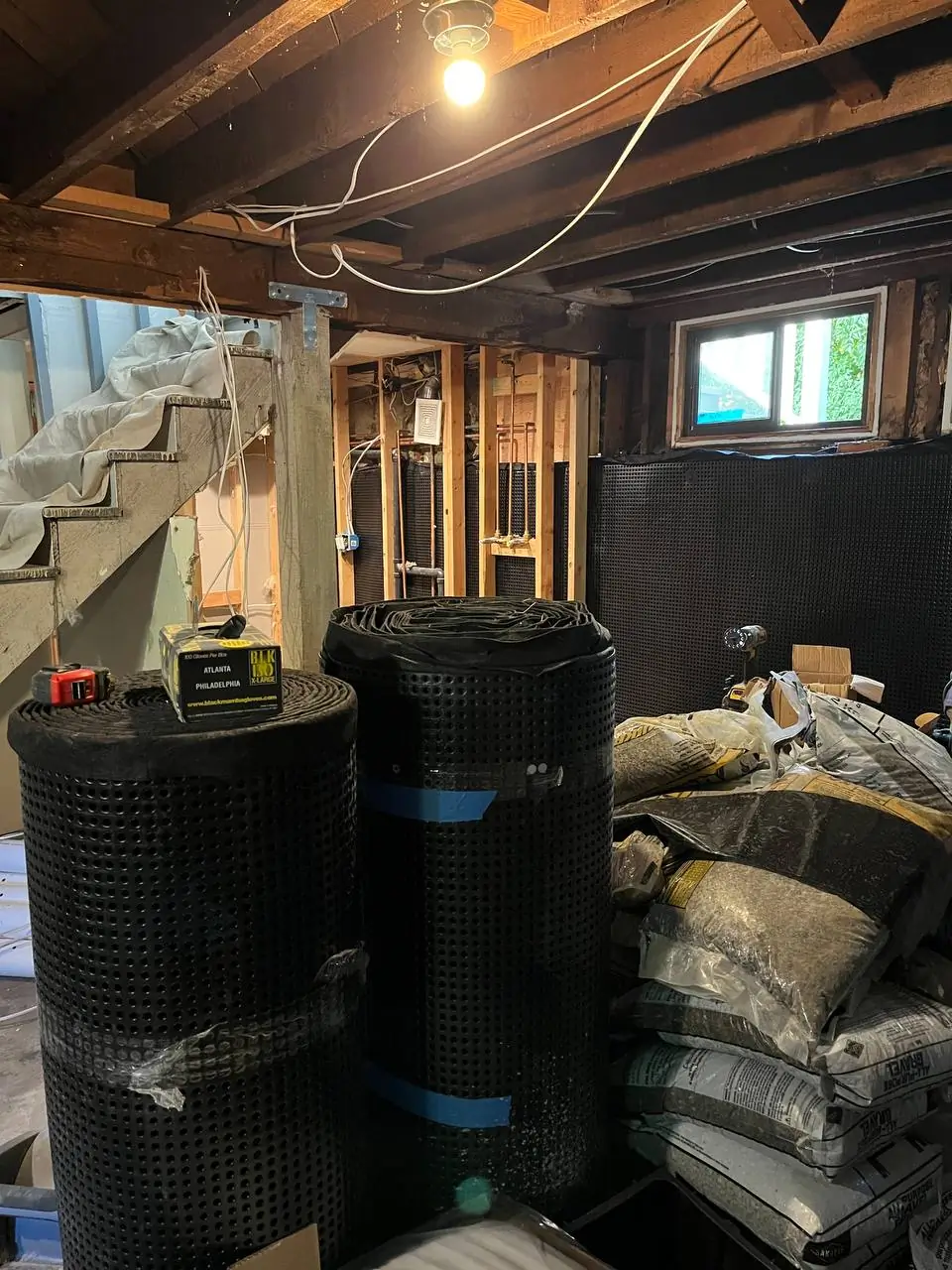
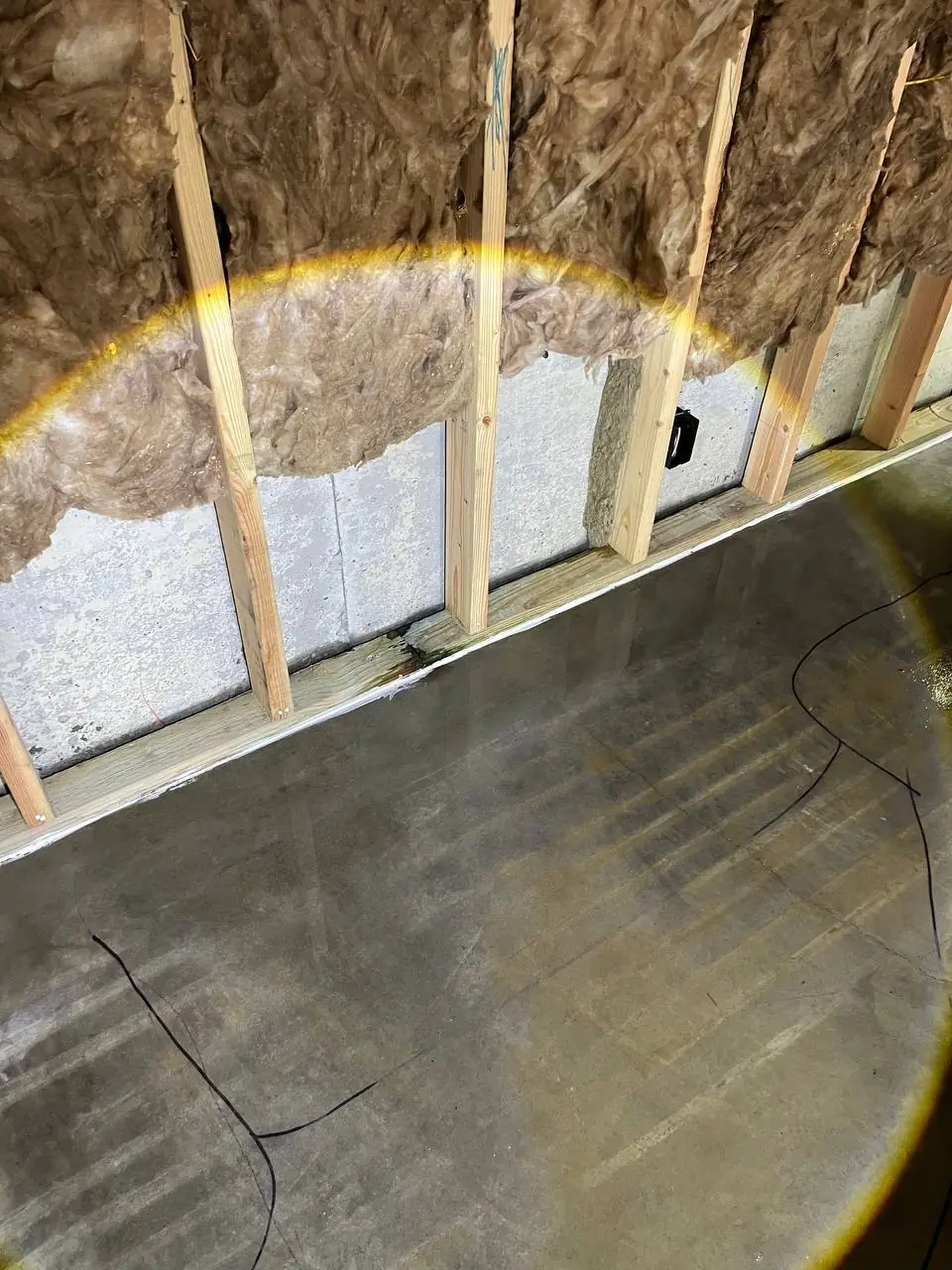
Why Daylight Walls Stay Wet After the Slab Looks Dry
Marine clay on these bluffs holds winter saturation against the wall. Upslope yards and street grades sheet water toward the footing long before the slab shows a film. That is a different load than Eastside cut-and-fill clay or a river-delta silt profile.
- Sheet flow from an upslope lawn or Marine View Drive gutter that outfalls at the property line
- A downspout adapter that dumps beside the footing instead of a tight line to a legal discharge
- A daylight wall with no membrane, so clay-held water sits on the joint
- A clogged collector or a discharge that daylighted into the same slope
We quote the hold-time we measure, not a generic finished-floor wetness script. If the only wet surface is a finished floor, that job belongs on the finished-space drainage page for this city.
Membrane, Interior Relief, or Stay Put — How We Choose
The choice is access and discharge, not a catalog of coatings. On a Marine View Drive bluff lot we ask: can we open the daylight face without undermining the slope, and is there a legal place to send water?
If the face can be opened, we set a membrane as a slip sheet into a collector at the footing. If the face cannot be opened, we cut inside, collect at the joint, and leave the slope alone. If the wall is moving, that is a foundation repair question first—we will not sell a drain on a wall that needs restraint.
For when an exterior dig is actually worth the disruption, see our field note on exterior work.

When a Crack Is Only a Leak Path
A hairline on a daylight wall is often a path for clay-held water, not a bowing-wall project. We dye-test and watch the crack through a wet cycle before anyone talks carbon fiber.
- Non-moving leak path: flexible injection to fill the thickness, then we still check the joint collector
- Moving or stepped crack: stop and send that scope to the structural page—do not coat over it
- Coatings alone: useful as a vapor layer after the water is collected; they fail as the only fix against hydrostatic load. Indoor dampness guidance from the EPA on mold and moisture is the health frame we use in occupied rooms


Injection When the Wall Is Still Plumb
Epoxy is for a structurally sound crack we want to weld. Polyurethane is for a leak that still breathes a little with the seasons. Neither one replaces a collector at the footing if the clay is still charging the joint.


Why a Coating Is Not the Exterior System
Cementitious paint on the inside is cheap and it will look dry for a while. On South King coastal grades the clay moves and the film shrinks. We will use a coating as a finish layer after drainage exists. We will not sell it as the membrane.


Perimeter Collection at Footing Depth
The collector is a French drain at footing depth, tied to a basin and pump or a legal gravity outfall. The membrane is the slip sheet that drops water into that line. Discharge has to leave the slope—dumping into the same bluff face is how the next storm reloads the joint.


What We Measure Before We Cut Concrete
We do not start with a six-step brochure. On a bluff lot the first day is measurements:
- Moisture map on the daylight face and at the footing reveal
- Access width, neighbor setback, and whether a retaining face blocks a trench
- Discharge: tight storm, rock well, or no legal outfall
- Whether interior cut-and-collect is the only honest open
After those numbers, the work is ordinary: isolate the room, cut, trench or interior channel, set membrane, set the collector, restore the slab. Call (206) 388-7867 with the address, which wall is wet, and how long the dampness lingers after rain.


Drive Time, Access, and What We Do Not Quote From Lynnwood
We run this work from Lynnwood. A Normandy Park bluff job is a South King drive, not a next-door dispatch. We will say that up front, including same-week vs next-week capacity.
Local crew, not a call-center script
Basement Expert (Artbrick LLC) is a family crew. We will walk the slope with you and tell you if we should not open it. We do not do crawlspace encapsulation on this page’s scope.
NDS Certified Drainage Specialists
As an NDS Certified Drainage Communicator we size the collector for the sheet flow we measure, not a catalog kit.
Clean-Air HEPA Filtration Technology
Interior concrete cutting uses HEPA scrubbers and a contained work zone so occupied rooms stay on the other side of the plastic.
Open-hole membrane on a new pour
On a new foundation we want the membrane and collector in before backfill. Staging around Town Center grades means we work the pour window, not a later interior cut if the hole is still open.
Re-work on a lived-in bluff house
Existing houses usually need a decision between exterior open and interior collect. We remove wet wood only when it is in the way of the new joint detail. Lifting a settled foundation is outside this page—that stays on the structural handoff.
What Moves Price on a Bluff-Side Excavation
Price moves with trench depth, shoring, and whether we can discharge by gravity. A single injectable leak path is a small ticket. A full daylight-face open with a tight setback is the other end. We quote after we see access—not from a photo of a damp corner.
Questions Before You Book a Bluff-Lot Inspection
These are the operator questions we actually get on Marine View Drive and Town Center lots. Call (206) 388-7867 if you already know which wall stays wet.
Neighborhoods and Corridors We Serve
From Lynnwood we run foundation waterproofing in Normandy Park along Marine View Drive, Town Center grades, and the nearby bluff streets. The tell is a damp daylight wall and a wet footing joint, not a finished carpet.
Nearby Cities
Finished-floor seepage: finished-basement drainage page. Service-line overview: foundation waterproofing.

