

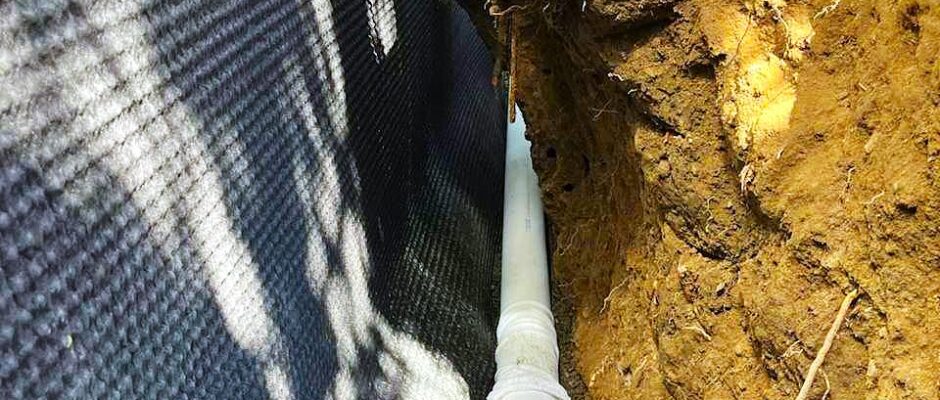
Hydrostatic pressure in Seattle-area basements
- After heavy rain, groundwater can push up against your basement floor and walls — that force is hydrostatic pressure.
- Typical signs: damp carpet, water at the wall–floor joint, white powder on concrete, or a sump that never stops.
- The durable fix is drainage that moves water off the structure — not just sealing or drying the air.
You do not need a physics lesson. You need to know what you are seeing in your house after a wet Puget Sound week, what is going on under the slab, and what actually works here.
What you notice inside the house
- Damp carpet or vinyl along the edges, especially after storms.
- Water at the wall–floor joint — same corner or wall every time.
- White powder (efflorescence) on concrete — water moved through the wall and left minerals behind.
- Sump pump running nonstop — or a full pit and a pump that never kicks on.
In older Seattle, Everett, and Eastside homes, the first sign is often the basement floor edge, not a dramatic flood.
What is happening under the slab
Rain and glacial soils in our region saturate the ground around your foundation. When the soil cannot drain fast enough, water builds up and pushes against the underside of the slab and the outside of walls — like water pressing on a boat hull.
What you can check safely
- After heavy rain, note whether water appears at the same wall or corner every time.
- Listen for a sump pump that runs constantly or never kicks on when the pit is full.
- Walk the exterior: downspouts discharging within a few feet of the foundation, negative grade toward the house, or clogged yard drains.
- Notice musty smell in winter — humidity plus groundwater is common in the PNW.
What usually fixes it (and what does not)
Usually helps
- Interior or exterior French drains that collect water at the footing
- Sump pump with a discharge line that exits away from the house
- Yard grading and downspout extensions
- NDS-certified drainage design — water off the structure, not trapped against it
Often not enough alone
- Interior paint-on sealers only
- Plastic on walls with no drain path
- Encapsulation that blocks vapor but leaves groundwater in place
- Running a dehumidifier while water still enters every storm
When to call a professional
- Water returns every rainy season in the same spot.
- Water spreads across the floor or depth increases year over year.
- New cracks, bowing walls, or sticking doors appear on the wet side of the house.
You want photos, moisture paths identified, and options that address where water enters and how it leaves — not a one-size package.
Hydrostatic pressure is groundwater pushing on your foundation. In the Puget Sound area, the durable fix is drainage and discharge — not just drying the air or sealing the surface.
Not sure what you are seeing? A site visit can map moisture paths and drainage before you spend on the wrong fix.

