

Garage waterproofing
Stop wet garage floors, apron seepage, and driveway runoff with drainage and waterproofing scoped to how water enters—not a coat of paint on the slab.


NDS-certified. Active diversion—not passive barriers.
Garage waterproofing at Basement Expert means moving water off the slab and away from the structure. Sealers help only after the water path is controlled.
What garage waterproofing covers
We stop water that enters through the door, apron, walls, or slab—common on Puget Sound driveways and below-grade garages.
Slab seepageCenter wet spots when soils stay saturated
Failed trench drainsClogged, reverse-pitched, or dead-end drains

Garage waterproofing is a hire-intent service for homes where the garage stays wet—not a paint job. Driveway pitch toward the door, short downspouts, glacial till holding a perched water table, and missing or failed perimeter drains are typical drivers. We also see attached garages that share a wall or footing with a living basement; when that happens the same hydraulic system may feed both spaces.
If your living basement is wet too, start with our wet basement repair bridge for symptom routing—or stay here when the garage is the space you need dry for parking, storage, or a shop.


Inspection first, then the right system
Scope follows the water path. Runoff at the door is not the same job as hydrostatic push through the slab.
Map the path
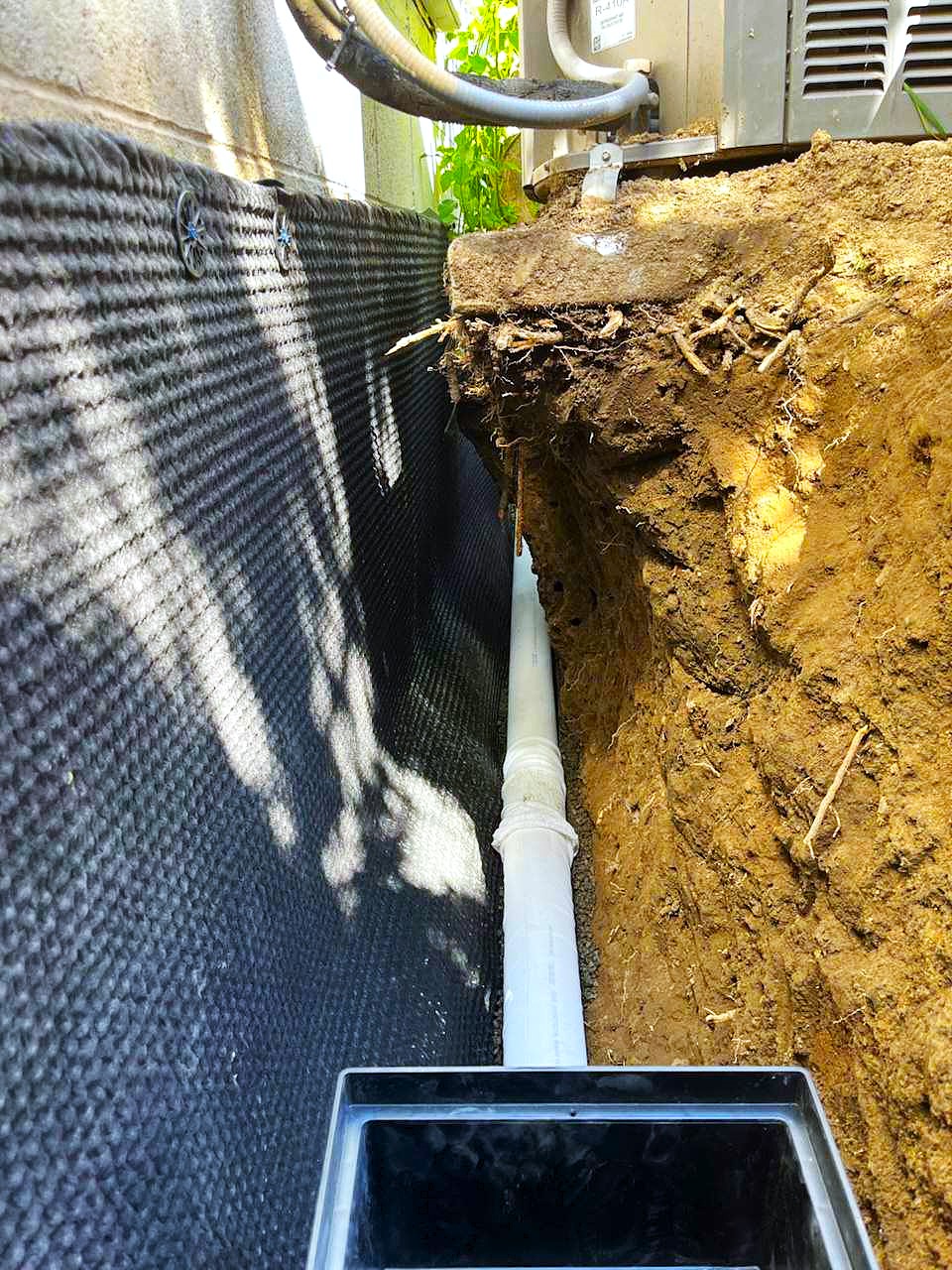
We check driveway and apron grade, threshold and trench drains, downspout discharge, perimeter tile, slab joints, and whether a gravity outfall exists.
Design diversion
Correct surface loading, rebuild threshold drainage when needed, add perimeter collection for sub-surface load, and size sump and solid PVC discharge when the floor sits below outfall.
Install & verify
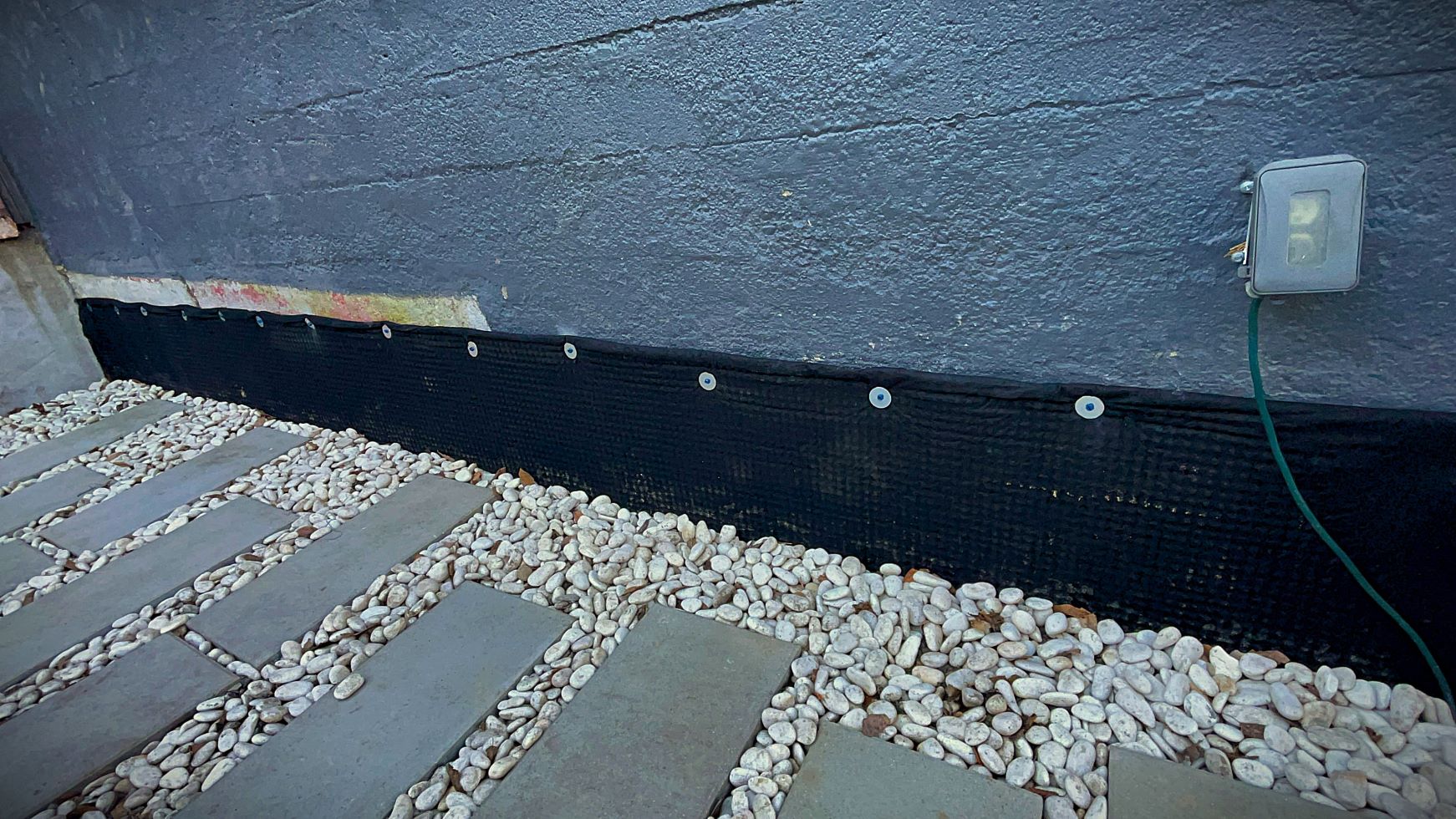
NDS-minded drainage details—filter fabric, washed aggregate, continuous collection, clear discharge. Coatings or finishes only after the structure stays dry.
We do not recommend epoxy or floor sealer as the primary fix. Coatings fail when pressure or runoff keep loading the slab—see why in our FAQ on sealers vs. garage waterproofing.
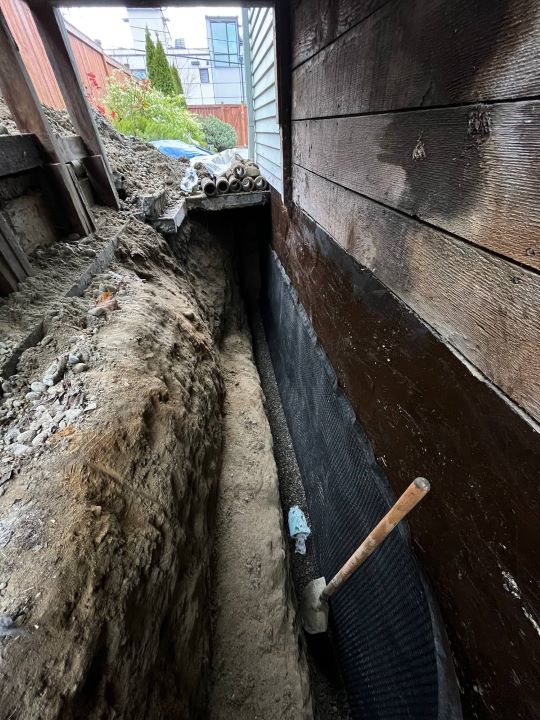
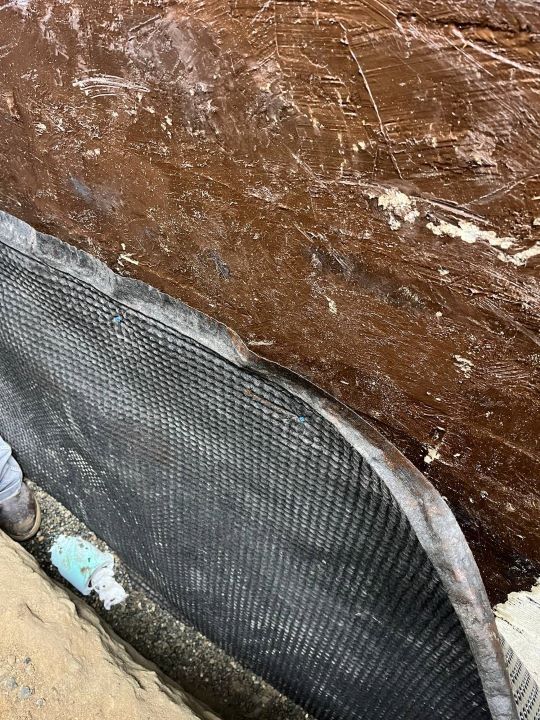
Get an on-site read of runoff vs. hydrostatic load—then a clear scope for garage waterproofing.
What you get with this service
Unit-based scope after we see the property—not a one-size “garage package.”
- Site evaluation of grade, apron, drains, slab entry, and discharge options
- Written scope for surface diversion, threshold/trench drain work, perimeter drainage, and/or sump as needed
- Solid PVC discharge design—never tying roof downspouts into the French drain
- Coordination with related basement waterproofing when the garage shares the same water load
Some garages need only apron and trench-drain correction. Others need a French drain and sump—we explain that choice clearly in French drain or sump for garage waterproofing.


Puget Sound coverage
Based in Lynnwood. Seattle brand door is the homepage; full city map lives on service areas.
We serve homeowners across greater Seattle, the Eastside, and Snohomish County. See service areas for the coverage map. For Seattle specifically, start at the Basement Expert homepage. More about how we work: About us.
Garage waterproofing questions
Short answers here; linked FAQ posts go deeper.
Why does my garage floor get wet after it rains?
Usually driveway sheet flow toward the door, a bad apron or trench drain, or sub-surface pressure through the slab after soils saturate. Full answer
Can I fix a wet garage just by sealing the floor?
No. Sealers and epoxy do not stop hydrostatic load or heavy runoff; diversion comes first. Why coatings fail
Do I need a French drain or sump?
Sometimes—when groundwater loads the slab or the floor sits below a free outfall. Runoff-only cases may need grade and threshold work only. When drain and sump apply
How long does garage waterproofing take?
Most garage scopes run about 2–5 days once work starts, depending on excavation depth, trench-drain rebuilds, and whether a sump and discharge line are part of the job. Weather and access can extend the schedule; we confirm timing after inspection.
Is garage waterproofing the same as basement waterproofing?
Same physics—divert water, relieve pressure—but the garage often has a unique door/apron path and vehicle loads on the slab. Attached garages may share a footing with living space; we scope the garage bay here and coordinate basement work when both are wet.
Will this work if my driveway slopes toward the garage?
Yes—but grade and apron correction are part of the fix, not optional extras. If sheet flow keeps dumping under the door, perimeter drains alone will keep fighting the same reload. We fix the surface path and the sub-surface path together when both are present.
Ready for a dry garage? Schedule garage waterproofing inspection with Basement Expert.
Serving Puget Sound from Lynnwood — see all services.

