

Basement Floor Crack Repair in Seattle
Damp lines along slab joints often show up before the carpet smells musty

Skip hardware-store caulk on a pressurized slab. We map damp paths, check for voids under the concrete, then inject only when the floor—not a wall opening—is the failure mode.
⭐⭐⭐⭐⭐ 5-Star Rated Repairs | Based On GMB Reviews
Slab leak paths & floor-joint sealing — Basement Expert · ARTBRL*812B8
Basement floor crack repair in Seattle starts on the slab itself: damp lines at saw cuts, hairline openings that weep after atmospheric-river weeks, or a lip where one side of the concrete sits higher than the other. Basement Expert (Artbrick LLC · ARTBRL*812B8 · (206) 388-7867) inspects the floor plane first—width, offset, active moisture—then chooses epoxy, polyurethane, or a drainage handoff instead of painting over the symptom.




What a cracked basement slab is telling you
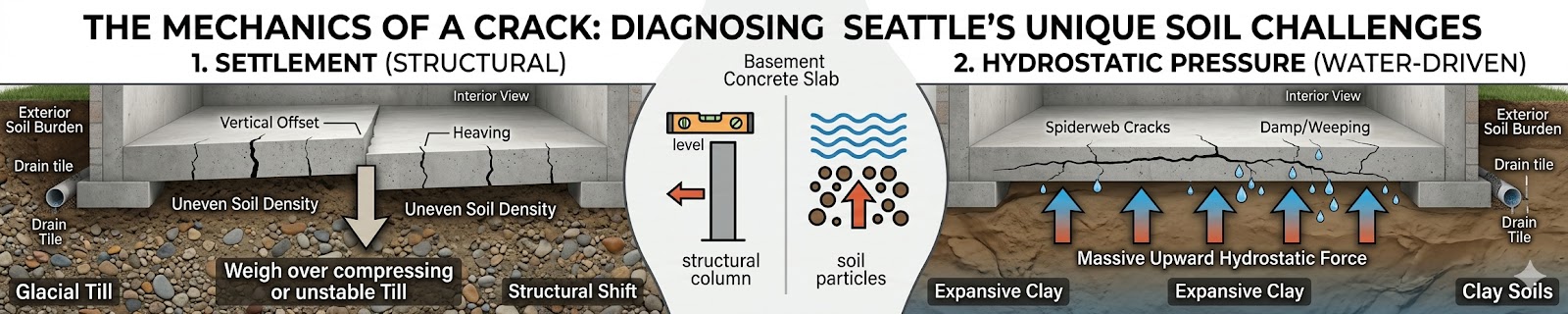
Heave, settlement, and water drive—reading the floor plane
Not every line in a basement slab is the same job. We separate cosmetic shrinkage from movement and from active hydrostatic push before we open a resin cartridge.
Settlement and differential support
When fines wash out or fill settles under the pour, one side of a crack can drop. You may see a step at the joint, racked door hardware upstairs, or a hollow sound when you tap near the opening. On glacial till and mixed fill lots, that pattern matters more than the crack width alone.
- What we measure: offset across the crack, hollow areas, and whether the opening is still growing.
- What we refuse: injecting a stepped joint as if it were a flat hairline seal.
Hydrostatic push through the slab
Saturated clay under a slab can drive water up through cold joints and random cracks. Those openings often stay damp between storms and may show white efflorescence. Plugging the top without relieving pressure—or checking perimeter drainage—just moves the weep to the next weak line.
- Look: damp maps along joints, musty carpet pads, or water that returns after DIY caulk.
- Fix path: full-depth injection when the crack is the path; drainage evaluation when the slab is acting like a relief valve.
Why slab work is not wall-crack work
Wall openings and carbon-fiber straps are a different silo. If the failure is on a vertical wall, use our wall crack repair in Seattle page. Floor jobs stay on the horizontal plane: ports in the slab, resin choice for wet vs dry, and sub-slab void checks.
Related handoffs when the inspection points past injection alone: foundation repair hub, basement waterproofing, foundation waterproofing, carbon fiber for wall bowing, and french drain when water needs a path out—not another surface patch.
Four-step slab injection (when the floor owns the leak)
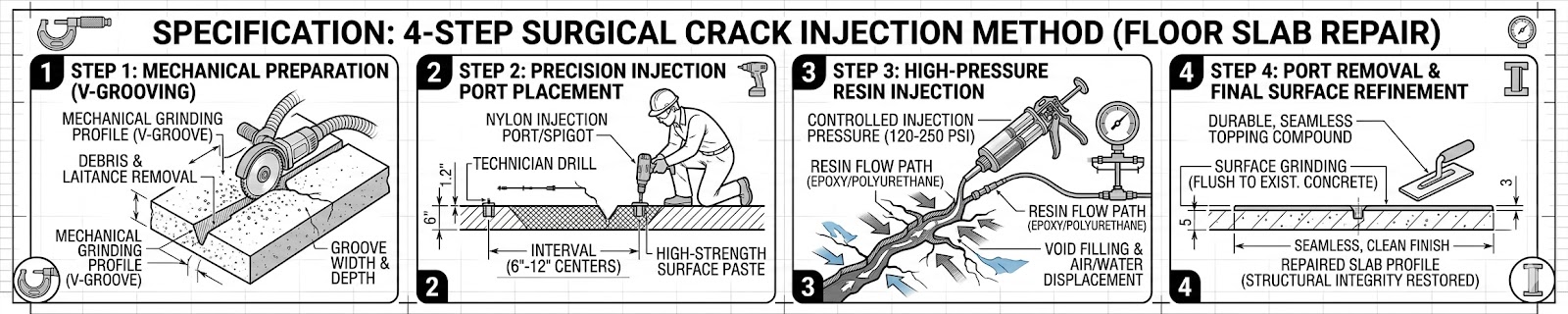
Surface caulk sits on top of the concrete. Slab injection fills the opening through the pour so water and soil vapor cannot keep using that path.
1. Clean and V-groove
We remove loose laitance, old filler, and salts, then open a shallow V so resin bonds to sound concrete—not dust.
2. Set ports and surface seal
Ports go along the crack at spacing matched to width. A surface paste closes the face so resin travels down into the slab instead of bleeding out.
3. Inject epoxy or polyurethane
Dry structural lines often take epoxy. Actively wet joints usually take expanding polyurethane. We chase resin port-to-port until the path is full.
4. Strip ports and grind flush
After cure, ports come off and the face is ground so flooring or coatings can go back without a ridge.
What we will not do
We will not treat a heaving, offset slab as a cosmetic seal, and we will not keep injecting if the real driver is a failed perimeter drain. That is when we pause injection and talk drainage or a broader foundation scope instead of another surface patch.
Five steps from slab inspection to finish-ready floor
1. Inspection and Evaluation
2. The 24-Hour Precision Quote
3. Work Schedule
4. Professional Clean-Up & Finishing
5. Post-Project Documentation & Warranty
Where we work on basement slabs
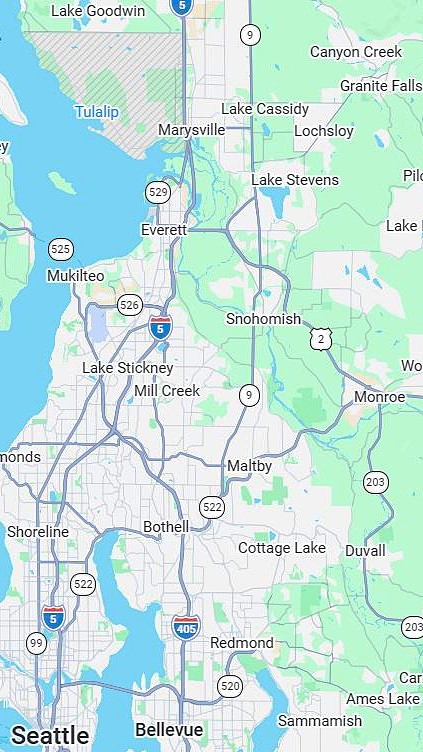
This page owns slab and floor-joint repair in Seattle. We regularly inspect floors in Ballard, West Seattle, Northgate, and nearby King County basements where glacial till and fill meet wet winters.
For vertical wall openings in other cities, use the dedicated crack pages—not this slab URL:
Parent hub: foundation repair. Questions on scope? Call (206) 388-7867.
What gets worse if you wait on a slab crack
An open floor joint is a path—not just a line on the concrete. Water can cut fines from under the pour and leave hollow pockets. Soil vapor can also track into a finished basement even when you never see a puddle.
Sub-slab voids
Repeated wetting under the slab can wash support away. A hollow knock beside the crack, new lipping, or a soft spot under vinyl are reasons to map voids before you chase cosmetic filler.
Moisture under finished floors
Carpet pad and floating floors trap vapor. Homeowners often call about smell before they notice the joint that feeds it.
Why store-bought caulk fails on pressurized slabs
Caulk bonds to the top skin. Hydrostatic load works from below. When pressure spikes, the bead peels and the same damp map returns. Full-depth resin is a different mechanism: it occupies the crack through the pour.
How we price slab work
Quotes follow measured crack length, access, wet-vs-dry resin choice, and whether drainage must join the scope. We do not sell inflated “lifetime sticker” packages to hide unit pricing—ARTBRL*812B8 work is scoped to what the floor shows.
FAQs: slab leaks, cure time, and flooring
Does a damp saw-cut always need injection?
No. Some joints only need monitoring or a drainage fix. We inject when the cut is an active path or when sealing is required before finishes—and we say so when injection would be the wrong first move.
How do you choose epoxy vs polyurethane on a floor?
Dry, stable structural lines lean epoxy. Actively wet or seasonally weeping joints lean polyurethane. The visit decides; we do not pre-sell one resin for every slab.
When is a floor crack actually a wall or drainage problem?
If the wet line climbs a wall, or water enters at the cove joint from the perimeter, we stop treating it as a pure slab seal and point to wall crack repair, waterproofing, or perimeter drainage as needed.
What should I photograph before the visit?
Wide shots of the floor plane, close-ups of width and any lip, and photos after a heavy rain. Mark new growth with tape and a date.
How soon can flooring go back down?
Most injections allow finishes after a full cure window—often about 24–48 hours depending on product and site conditions. We grind flush so you are not working over ports.
Seeing a new line or damp map on the slab? Book a same-day floor inspection with Basement Expert — (206) 388-7867 · ARTBRL*812B8.

