

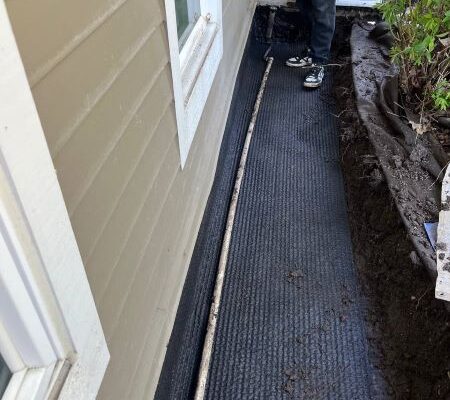
Exterior basement waterproofing — when it helps
- Exterior waterproofing is disruptive — and worth it when walls, not just the floor joint, are the weak point after rain.
- A proper job exposes the wall, adds membrane or drainage board, footing drain, and discharge away from the house — not just a trench in mud.
- If water only appears at the floor edge and walls are sound, interior collection plus sump may be enough — pick the smaller scope when it will work.
Exterior waterproofing is disruptive and effective when walls — not just floors — are the weak point. It is not always the first tool, but it is sometimes the right one.
When exterior makes sense
- Chronic wall leaks at the same elevation after rain.
- Failed or missing exterior drain at the footing.
- Finished interior you cannot disturb easily.
- New addition tying into an old wet wall line.
Excavation reality for homeowners
Expect temporary removal of plants, hardscape, and sometimes decks or steps. Access along tight Seattle lots takes planning. Work should include protection of the exposed wall, not just a drain in the mud.
Membrane and drain plane basics
A proper exterior system combines drainage board or membrane, footing drain, and discharge away from the house. The goal is to drop water pressure against the wall face and give water a path down and out.
Interior-only cases
If leaks are only at the floor joint and walls are sound, interior collection plus sump may solve it with less disruption. Honest assessment picks the smaller scope when it will work.
What usually fixes it (and what does not)
Usually helps
- Exterior membrane, dimple board, and footing drain with proper discharge
- Protecting the exposed wall during excavation — not drain-in-mud shortcuts
- Interior collection when only the floor joint leaks and walls are sound
Often not enough alone
- Exterior dig without addressing wall face protection
- Interior sealers only when walls leak at mid-height every rain
- Skipping drainage board because “sealant is enough”
When to call a professional
- Wall leaks at the same elevation after every wet season.
- Tight access, decks, or hardscape limit excavation options.
- You need a scope that compares interior vs. exterior honestly.
Exterior work is for protecting the wall from outside water load — worth it when that is where failure happens.
Not sure what you are seeing? A site visit can map moisture paths and drainage before you spend on the wrong fix.

