

Basement Waterproofing Arlington
Basement waterproofing in Arlington for floor water after valley soils saturate, wall damp, and older perimeter drains that were never tied off correctly.


NDS-certified crews, inspection before dig
We map how water reaches the slab and walls — saturated valley soils, untied perimeter laterals, roof discharge at the footing — then design NDS-certified collection that moves it out. Lynnwood headquarters; inspection first, scope second.
Floor water and wall damp you can spot
Open a symptom FAQ, then compare it to what shows up after a long wet stretch.
Living-space drainage for valley homes
North-county basements wet when Stillaguamish valley soils stay charged — we isolate entry paths before we recommend a dig.
Basement waterproofing Arlington work is about keeping the finished room dry when valley soils saturate and older perimeter drains never got tied off correctly. Floor puddles, wall damp, and musty air are living-space loads — different from footing-level exterior membrane work, which we hand off cleanly below when that is the real need.
North Snohomish County homes often see floor water after multi-day rain, not just a single storm dump. Fine soils hold charge. An untied lateral leaves water at the footing. A pump that still runs while the slab stays wet usually means discharge is fighting the lot, not that “you already have a system.â€
Start with the wet pattern. Center-slab damp after long rains points under the floor. One elevation that stains after every storm points to surface reload or wall seepage. Musty air with no standing water still means chronic moisture finishes will keep paying for.
System options and product paths live on the drainage systems hub. For under-slab push and wet-floor patterns, use the Field Manual links near the bottom of this page.
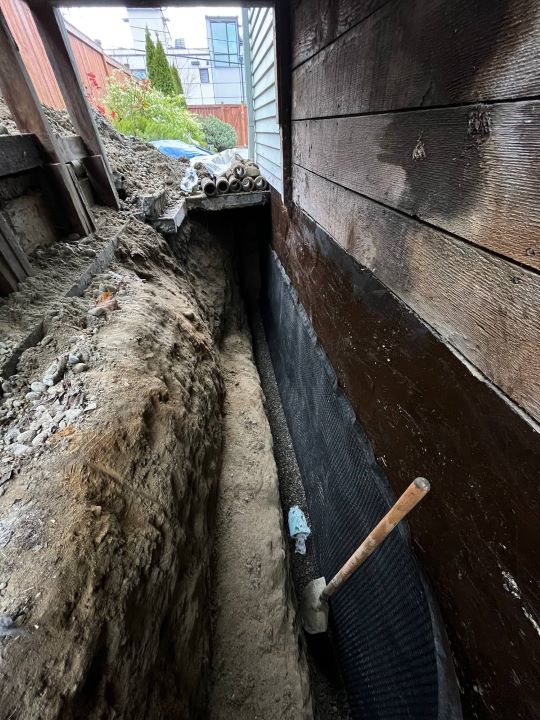
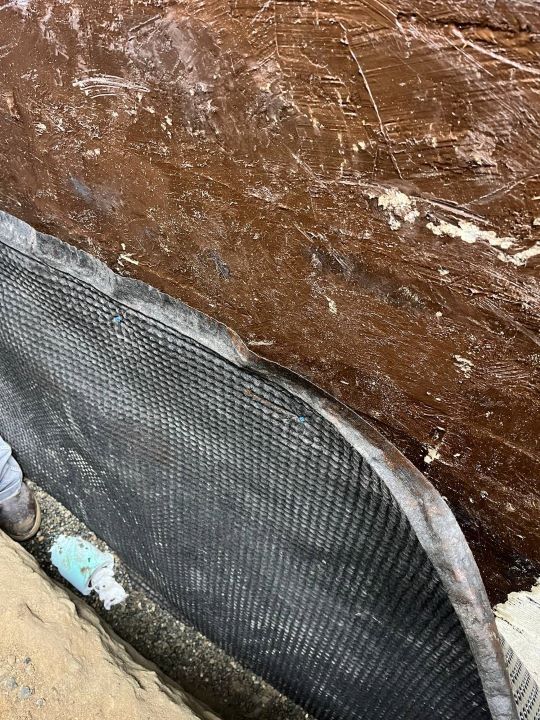
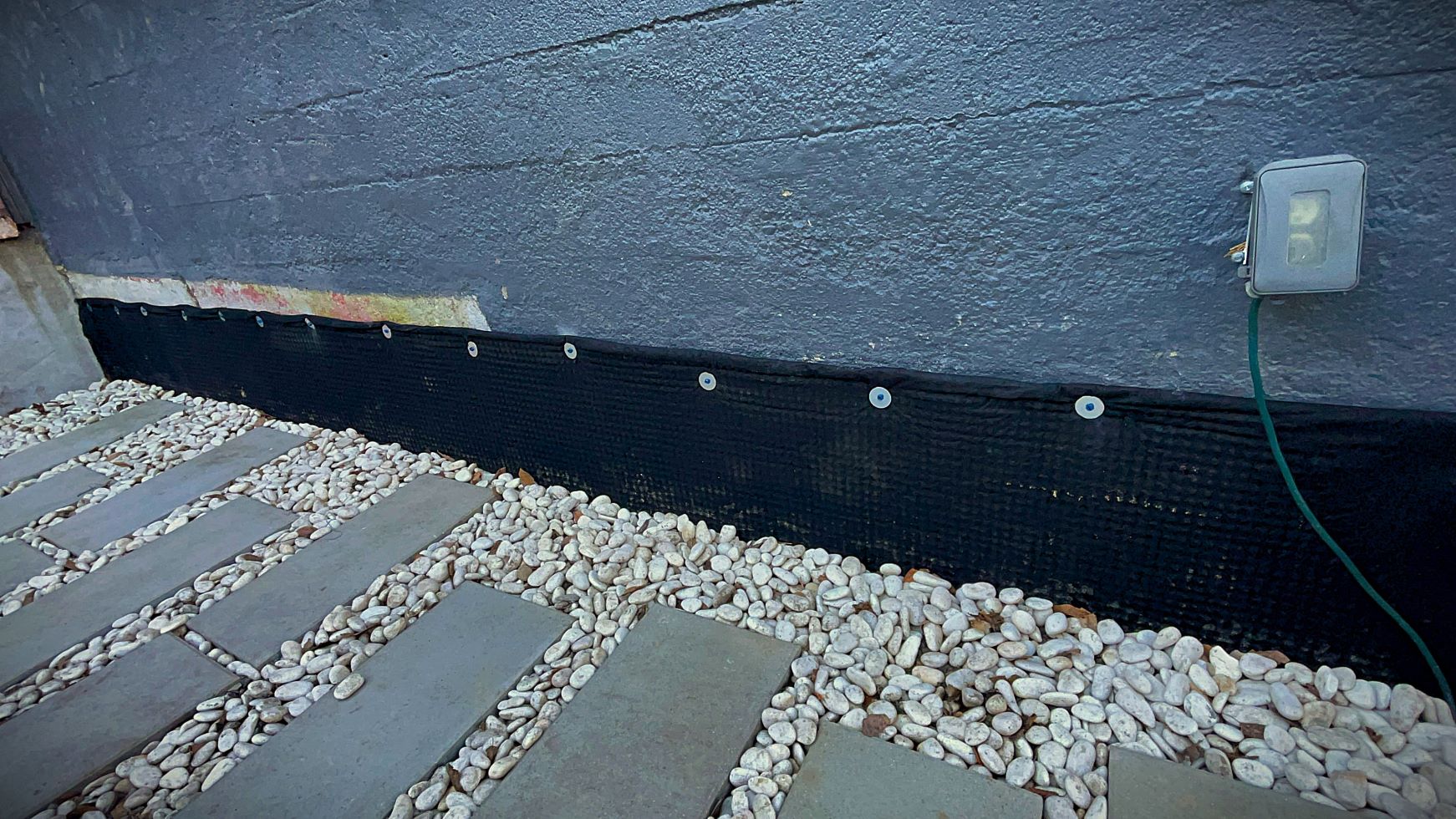

What loads the floor and walls here
Most north-county wet-floor calls share a short cause list — we confirm which ones apply before we cut concrete or dig.
Charged valley soils. When Stillaguamish valley soils stay saturated, water pushes to cold joints, pipe penetrations, and the wall–slab joint. Interior coatings rarely hold that load through a full wet season.
Untied or clogged perimeter laterals. Older tile and pipe that were never tied off correctly leave water at the footing instead of leaving the lot. Interior collection can dry the living space; exterior work still matters when wall seepage is the main path.
Roof and yard reload. Short downspout extensions and grading toward the house keep feeding the same elevation after every storm. Discharge routing is part of the plan when surface water is the driver.
Pump and discharge mismatch. A basin that is too small, a pump that runs constantly, or a line that dumps next to the structure means the mechanical side is fighting itself. We size and route discharge so water leaves for good.
Deeper reads: hydrostatic pressure after PNW rain and water on the basement floor after rain.
Systems that dry the living space
The right path depends on where water enters — floor, wall, or both. We scope living-space moisture first.
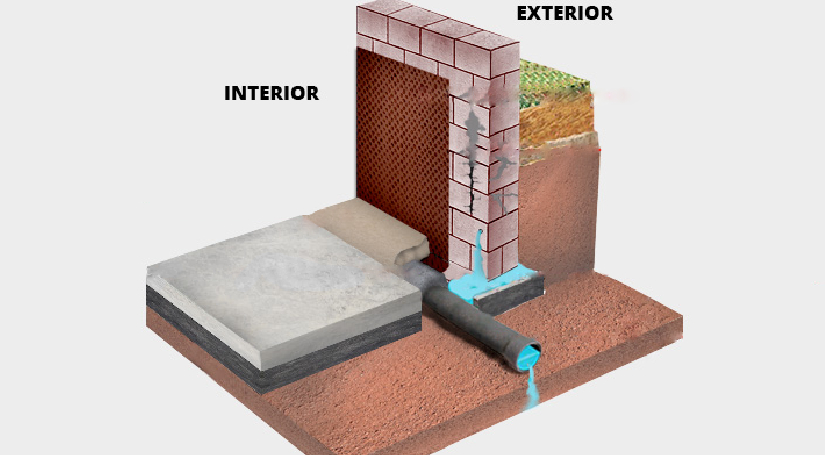
Interior drainage & sump
Sub-slab collection and sump systems when floor water or under-slab pressure is the main load — common when exterior access is limited.
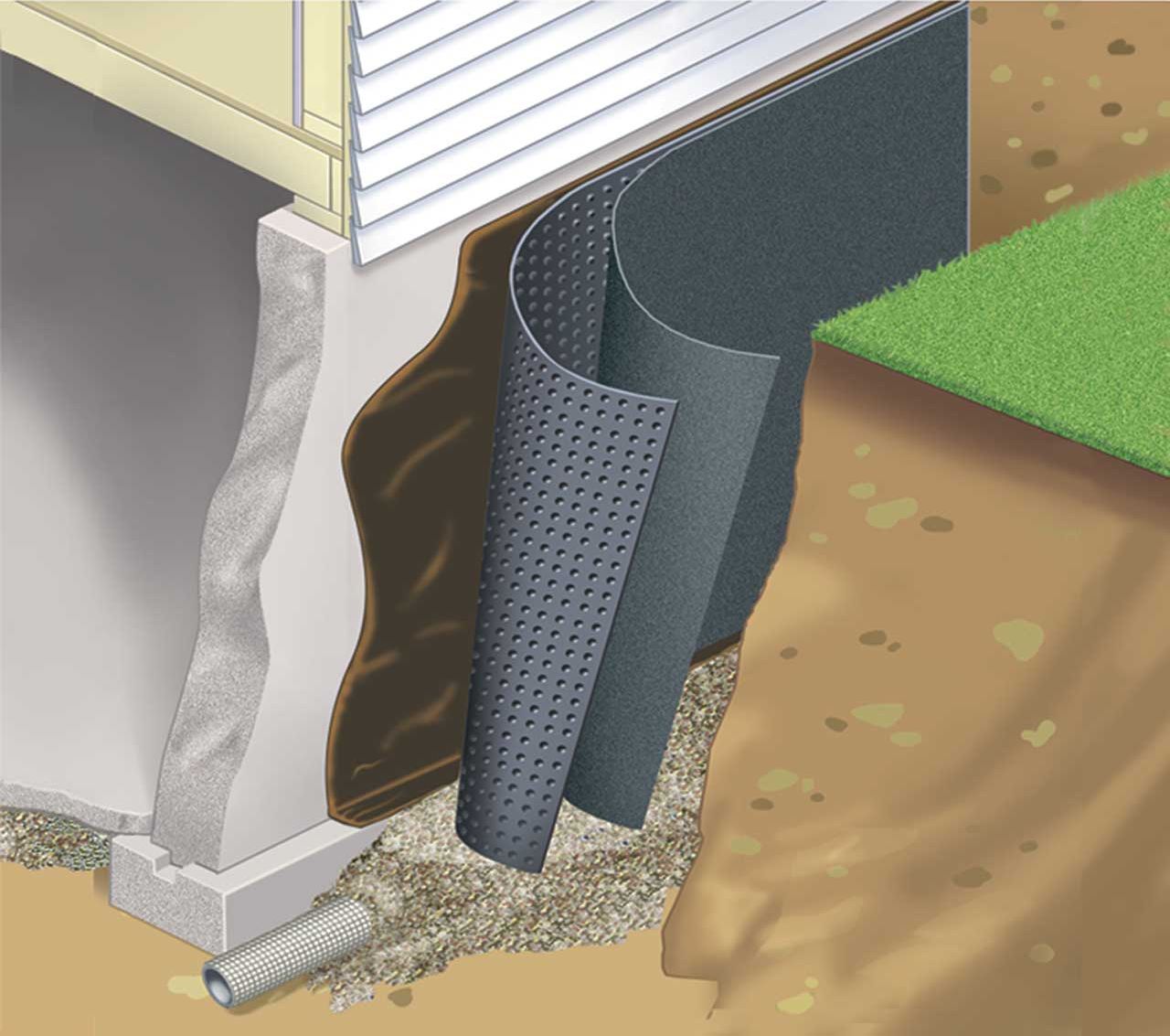
Exterior membrane & drain tile
Excavation and wall-side drainage when seepage needs to be stopped at the source — useful on lots with workable side yards.
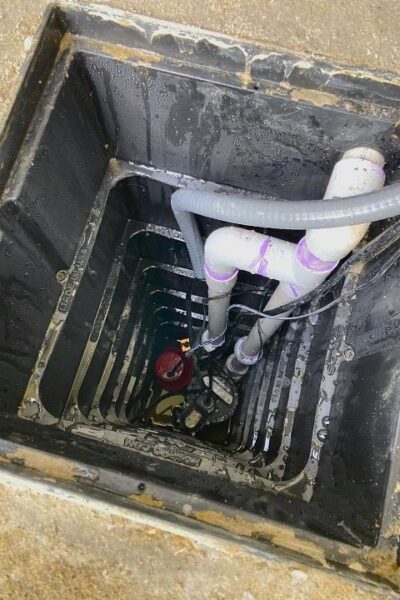
Sump & discharge fixes
Basin sizing, backup power, and discharge routing when the pump runs but the basement still wets.
What we check before recommending a scope
We do not sell one product on every call. We map entry paths, then recommend only what the house needs.
On a typical wet-floor visit we check gutter and downspout discharge, grading next to the house, wall and floor wet patterns, existing interior drains and sump condition, and whether older perimeter laterals look tied off. You get a clear scope: interior, exterior, sump/discharge, or a sequenced mix — with what we expect each piece to solve.
Paint-on coatings and crack injection without a drainage plan are the most common mis-buys we see after the fact. If under-slab pressure drives floor water, collection comes first. If one elevation weeps and excavation is possible, exterior work may be the durable path. If a driveway, deck, or tight lot line blocks access, interior systems often carry living-space dryness.
Basement waterproofing Arlington jobs are scoped after we see the water pattern — not before. When excavation and footing-level membrane are the main need — protecting the assembly itself rather than drying a finished room — we send you to the sister page instead of forcing that scope onto this one.
Living-space dryness vs footing-level membrane
This page is for wet basement living space — floors, walls, odor, seasonal seepage, and drainage that keeps the room usable. Footing-level exterior membrane and structural footing drainage are scoped separately so you get the right crew and the right dig.
Neighborhoods we commonly serve
North Snohomish County and Stillaguamish River valley lots share wet-season soil charge — the fix still depends on the house, not the zip alone.
We serve Arlington alongside Marysville, Everett, and Stanwood from our Lynnwood headquarters. Valley-floor slabs, older perimeter laterals, and larger north-county lots show up often; hillside and daylight basements need different access planning than flat parcels. We say that up front so expectations match the dig.
Browse all markets on our service areas page.
Nearby cities for the same service
Same living-space drainage work for immediate neighbors — each city page once.
Also serving Marysville, Everett, and Mill Creek — same living-space drainage service on each city page.
Questions before you book
Short answers before you schedule.
Why does the floor wet when valley soils stay charged? Saturated soils push toward the path of least resistance under the slab and at cold joints. Collection and discharge beat coatings when that load is the driver.
Will interior drainage help if the old perimeter pipe was never tied off? Often yes for living-space dryness. Untied laterals still matter for wall seepage; we say when exterior work should be sequenced.
Is excavation always required on a larger north-county lot? Not always. Interior systems solve many floor-water cases. Exterior digs make sense when wall seepage is primary and access is open.
Do the same crews cover Marysville and Everett? Yes — we run north-county work from Lynnwood. Local reviews and an on-site inspection matter as much as this page — schedule through contact or call (206) 388-7867.
How is a wet-floor job priced? Scope drives price. Crack-only work is not a full interior system or exterior dig. We quote after we see the pattern on site.
Field Manual guides
Plain-language answers from real jobs in Western Washington — read before you commit to a scope.
Ready for a wet-floor assessment? We inspect first, explain what we find, and scope drainage that matches how water actually enters your living space — not a one-size membrane pitch. Read more in the Field Manual.

