

Basement Waterproofing Redmond
Basement waterproofing in Redmond for Sammamish Valley slope and older-neighborhood homes that show floor-edge water when storm runoff saturates clay soils after weeks of rain — inspection first, then drainage sized to that edge charge.


Engineering-first, NDS-certified drainage
We trace whether Sammamish Valley storm runoff has saturated clay at the floor edge, older cold joints are weeping under that multi-week charge, or both — then design NDS-certified collection and discharge that moves water off the living space. Based in Lynnwood; inspection first, scope second.
Floor-edge damp after weeks of rain — clues you can map
Match a symptom to what shows when valley-slope runoff keeps clay charged at the slab edge through a long wet stretch.
Sammamish Valley slope living-space moisture
Homes on Sammamish Valley slopes and older Redmond neighborhoods often show floor-edge water when storm runoff saturates clay soils after weeks of rain — we isolate that path before we dig.
Basement waterproofing Redmond work is about drying usable living space when valley-slope runoff recharges clay that clings to the floor edge and wall–slab seam through a long wet calendar. That is a different job from footing-level exterior membrane work scoped only to protect the assembly — we hand that off cleanly below when it is the real need.
On Sammamish Valley slopes and older neighborhood parcels, weeks of rain drive storm runoff into fine clay at slab-edge elevation. That clay drains slowly, so charge sits against cold joints and the floor perimeter long after a single front clears. A damp band that tracks multi-week saturation — not a one-hour roof dump — usually means clay-held floor-edge load, not a paint-on fix.
Start with the wet map. Floor-edge damp after weeks of rain points to clay holding charge at the seam. Wall staining higher up with little edge pooling may still need a different sequence. Both patterns on the same visit means sequenced collection and discharge, not a coating pitch.
System options live on the drainage systems hub. For floor-edge and wet-slab patterns, use the Field Manual links near the bottom of this page.
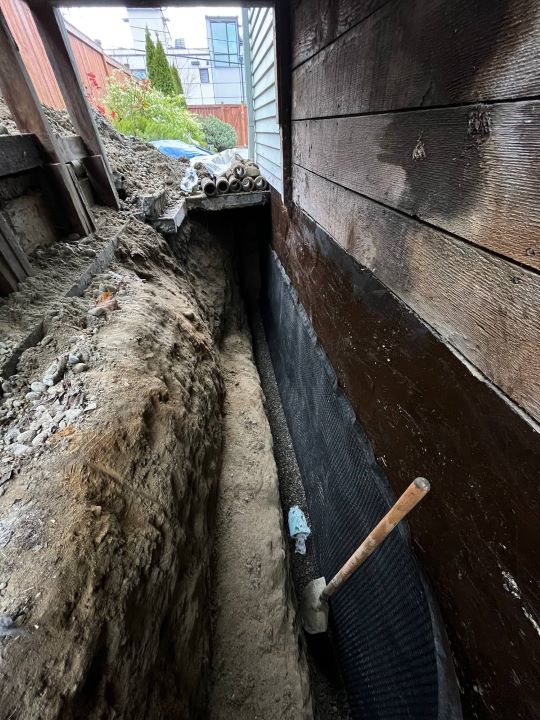
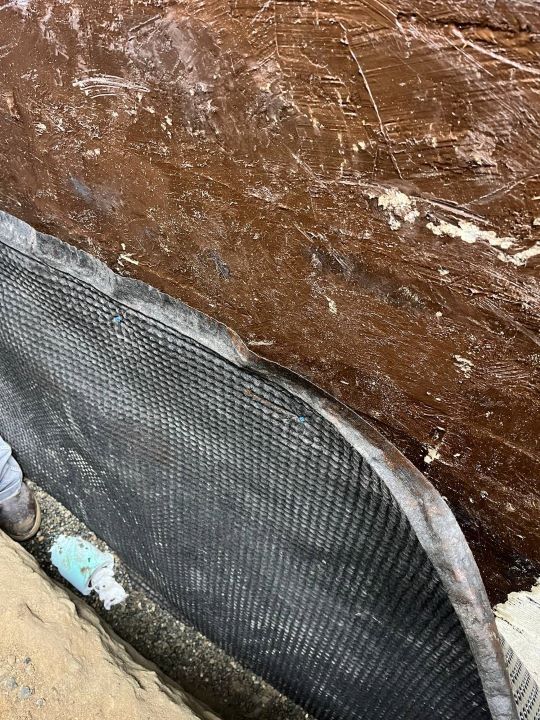
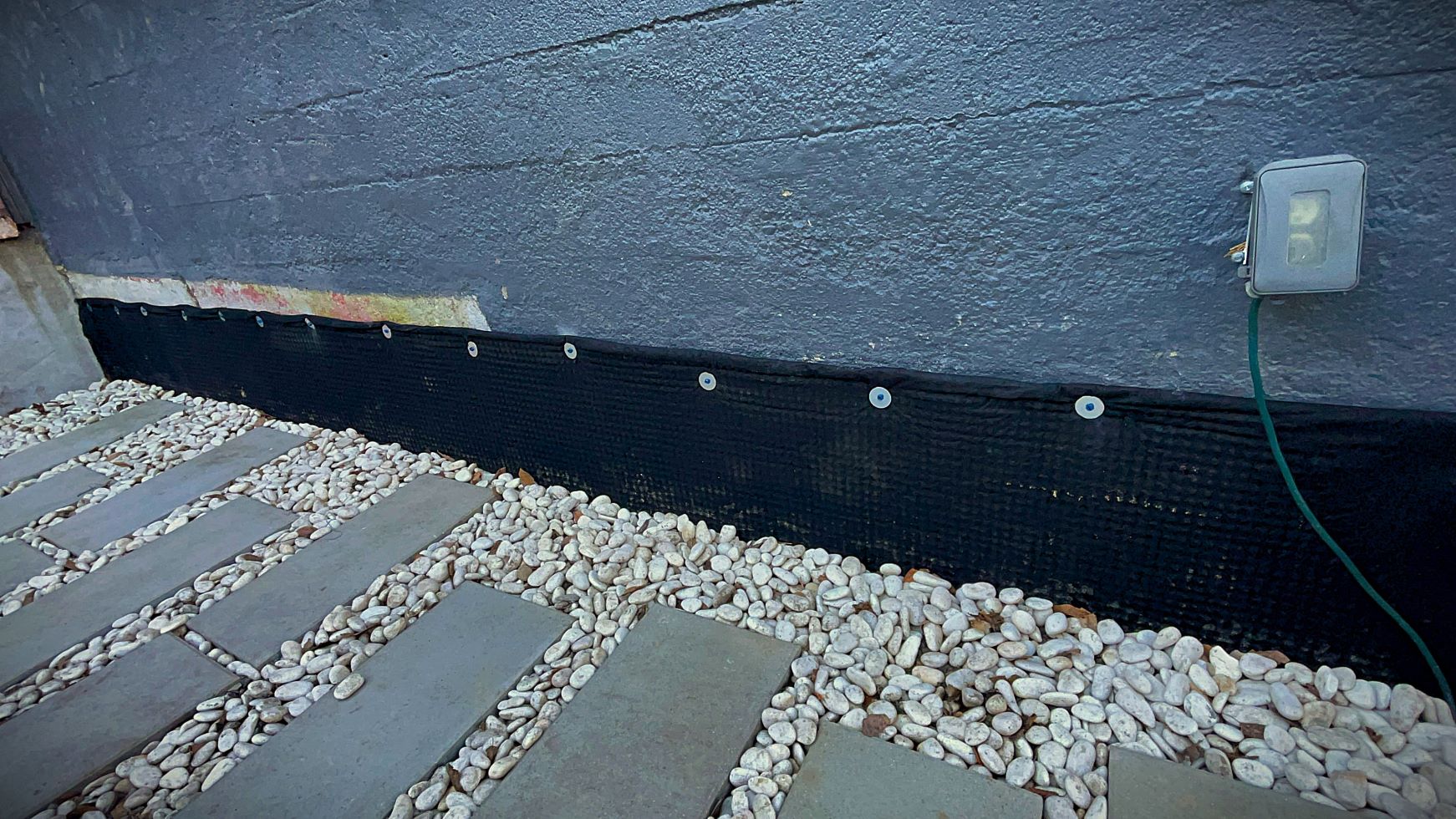

How storm runoff saturates clay at the floor edge
Most valley-slope wet calls share a short list of loads — we confirm which ones apply on site before we dig.
Storm runoff recharging slope soils. When weeks of rain drive water down Sammamish Valley slopes, parcels take on soil charge at floor-edge elevation. That load shows on a multi-week wet calendar — not after a single sprinkle.
Clay holding water at the wall–slab seam. Fine clay under Eastside tech-corridor lots drains slowly. Once charged, it keeps water pressed at the floor edge and cold joints long after surface runoff slows.
Limited daylight fall on slope lots. Grades toward the valley often leave short paths for surface water. Water that cannot leave the parcel reloads the same floor-edge elevation every extended wet stretch.
Floor-edge entry before mid-wall seepage. Damp that tracks the perimeter with little staining higher up often means clay-held edge load first. Primary mid-wall seepage with open access may still need exterior work sequenced after living-space collection is planned.
Collection sized for floor-edge clay charge
We match collection and discharge to the entry path — clay-held floor-edge charge, wall-base seepage, or both — instead of selling one product for every valley lot.
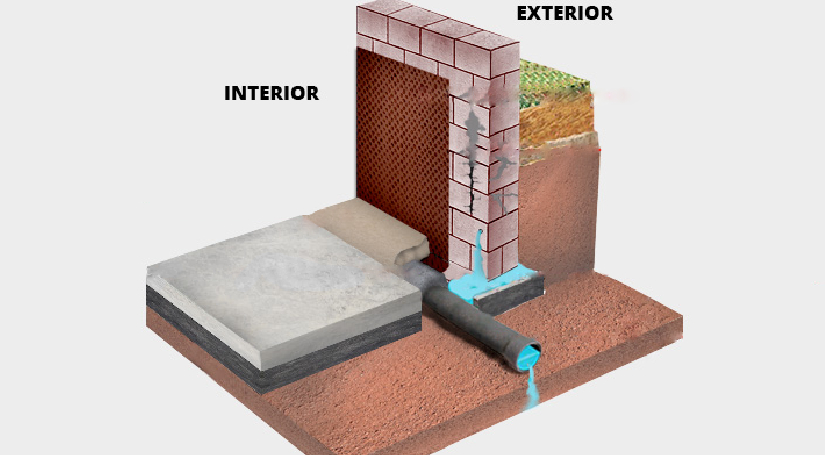
Interior drainage & sump
Wall-base and sub-slab collection when clay floor-edge charge or limited exterior access is the main load — common on tight valley-slope lots.
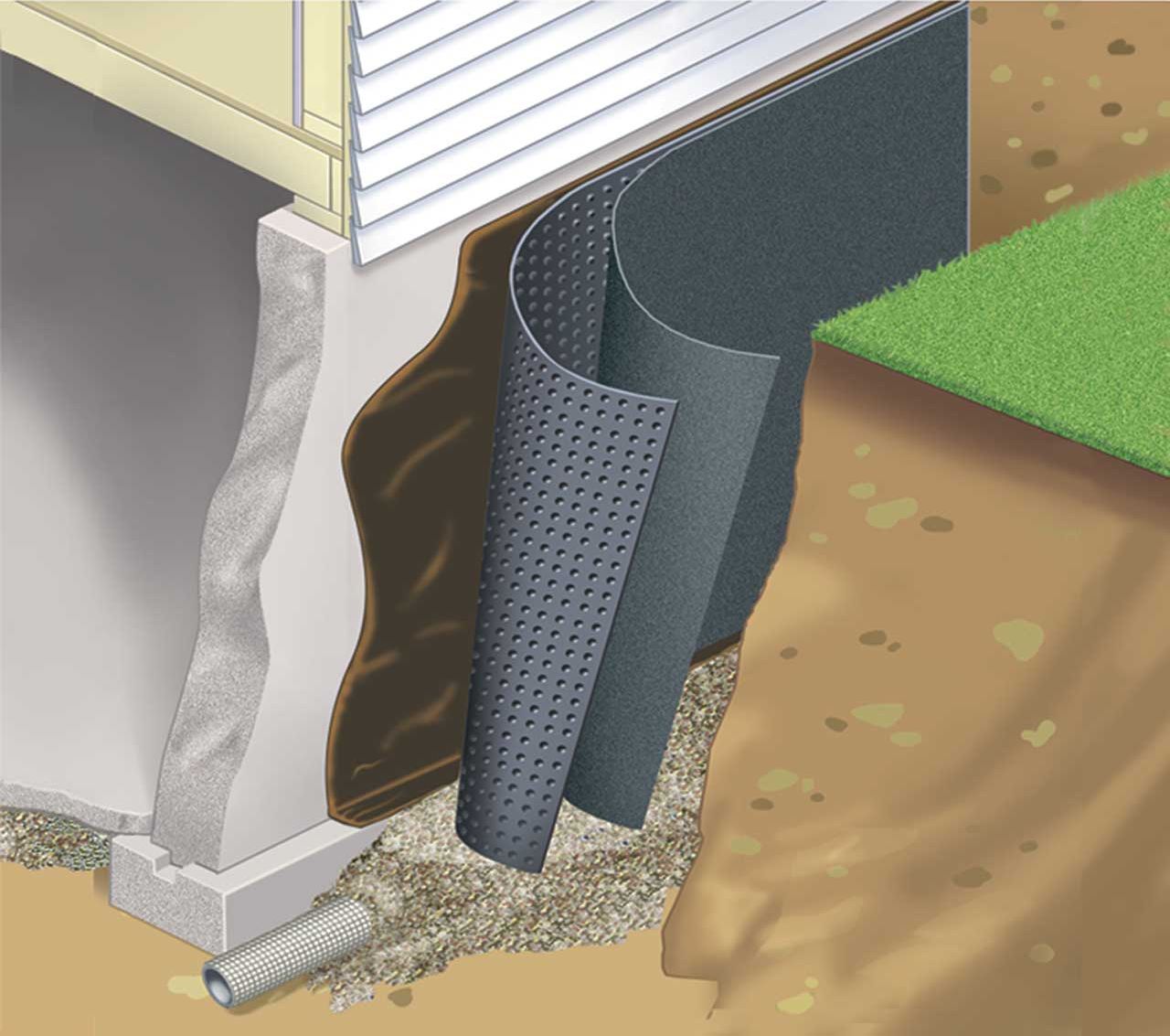
Exterior membrane & drain tile
Excavation and wall-side drainage when primary wall seepage needs to be stopped at the source — scoped when access and the wet map support it.
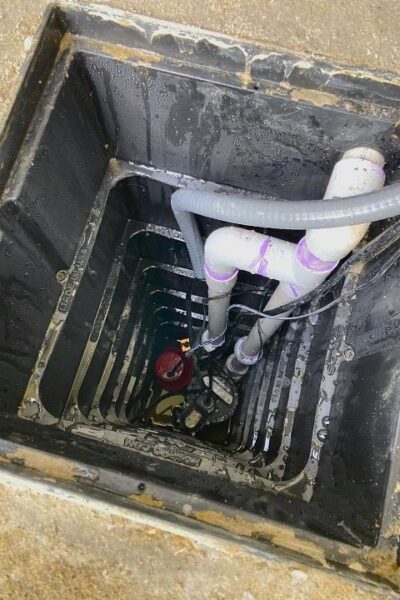
Sump & discharge fixes
Basin sizing, backup power, and discharge routing when collection works but water still sits against charged clay next to the house.
What we map on valley-slope basements before we dig
We do not sell a single product on every call. We map multi-week runoff timing, clay charge at the floor edge, and discharge paths, then recommend only what the house needs.
On a typical Sammamish Valley slope visit we check gutter and downspout discharge, grading toward the valley face, floor-edge wet patterns versus multi-week rain timing, existing interior drains and sump capacity, discharge routing onto charged clay, and access for exterior work if mid-wall seepage is primary. You get a clear scope: interior, exterior, sump/discharge, or a sequenced mix — with what we expect each piece to solve.
Paint-on coatings and random crack injection without a drainage plan are the most common mis-buys we see after the fact. If clay floor-edge charge is driving the damp band, collection and discharge come first. If one high-side wall weeps and excavation is possible, exterior work may be the durable path. If access is blocked by driveways, slabs, or tight lot lines, interior systems often carry the load for living-space dryness.
Basement waterproofing in Redmond is scoped after we see the wet map against the floor edge — not before. When excavation and footing-level membrane are the main need — protecting the assembly itself rather than drying a finished room — we send you to the right page instead of forcing that scope onto this one.
Basement living space vs footing-level membrane
This page is for wet basement living space — clay floor-edge charge after weeks of rain, wall–slab damp, and drainage that keeps the room dry. Footing-level exterior membrane and structural footing drainage are scoped separately so homeowners get the right crew and the right dig.
Neighborhoods we commonly serve
Sammamish Valley slope, older neighborhood, and Eastside tech-corridor lots share clay floor-edge charge after sustained rain — the fix still depends on the house, not the zip alone.
Across Redmond we regularly assess and dry living space on Sammamish Valley slope blocks, older neighborhood parcels toward Education Hill and Downtown edges, and lots along the Eastside tech corridor where clay fines sit at slab elevation. Low valley slabs need different collection sizing than higher slope lots. We say that up front so expectations match the dig.
Browse all markets on our service areas page.
Nearby cities for the same service
Same living-space drainage work for immediate neighbors — each city page once.
Floor-edge and clay questions before you book
Short answers before you schedule.
Why does clay at the floor edge wet after weeks of rain on Sammamish Valley slopes? Fine clay drains slowly. Once storm runoff reloads the soils for weeks, water stays pressed at the wall–slab seam. Collection at the floor edge plus discharge that leaves the lot beats coatings when that path is the driver.
Is Redmond floor-edge clay wet the same job as Bellevue hillside daylight seepage? Not exactly. Floor-edge water after multi-week clay saturation on valley slopes is a perimeter-charge pattern. Bellevue hillside daylight wall seepage is a different wet map. We still inspect first instead of cloning a daylight-wall pitch.
Can exterior membrane alone fix floor-edge water after clay saturates? Sometimes wall-side work helps when primary seepage is clear and access exists, but if living-space damp tracks the floor edge under clay charge, interior collection and discharge usually come first. We sequence both when the map says so.
Do the same crews cover Kirkland, Bothell, and Bellevue? Yes — we run Eastside valley-slope work from Lynnwood. Local reviews and an on-site inspection matter as much as this page — schedule through contact or call (206) 388-7867.
How is floor-edge / weeks-of-rain clay work priced? Scope drives price. Coating-only work is not a full interior system or exterior dig. We quote after we see the pattern on site.
Field Manual guides
Plain-language answers from real jobs in Western Washington — read before you commit to a scope.
Ready for a Sammamish Valley floor-edge moisture assessment? We inspect first, explain what we find, and scope drainage that matches how clay floor-edge charge actually enters your living space — not a one-size membrane pitch. Read more in the Field Manual. Call (206) 388-7867.

