

Foundation Waterproofing in Redmond
Prevent damage and mold growth by waterproofing your foundation with best exterior or interior solutions. Engineered for the Eastside climate.

NDS-Certified Active Drainage Systems

Real Customer Reviews:


Why Eastside Basements Leak at the Footing
Do you see a damp line where the wall meets the slab after a wet week? On sloped Eastside lots that is usually groundwater moving downhill through the soil and stopping at your footing. A waterproofing company that only paints the inside wall leaves that water where it is.
We start by finding where the water enters, how high it rises, and where it can be sent. Then we match the fix to the house: drainage, a membrane, crack work, or a mix. Our goal is a basement that stays dry through the rainy season, with a system you can inspect later.
Hillside Lots, Cut-and-Fill and Daylight Basements
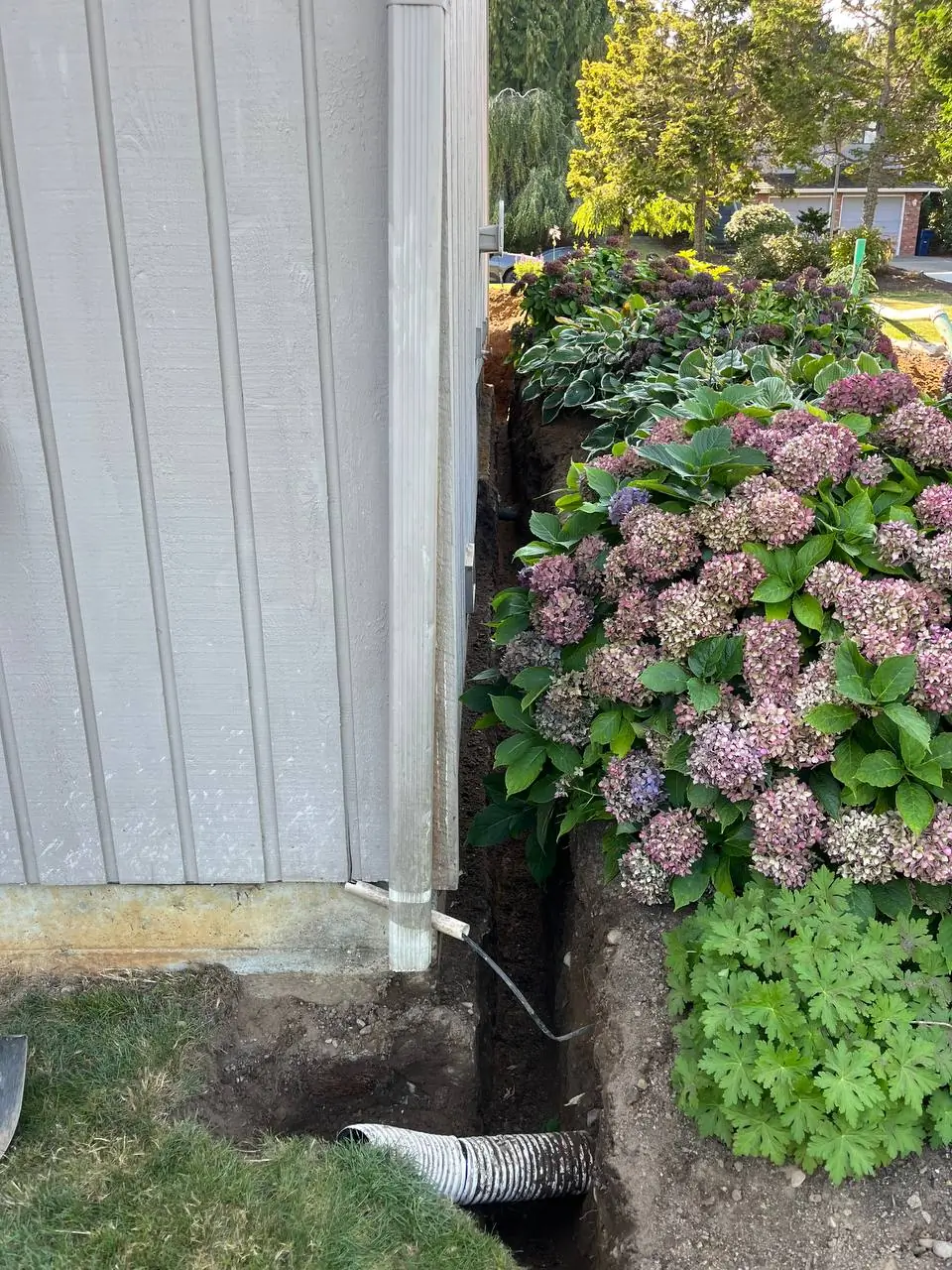
Many homes here were built on graded hillsides, with fill on the downhill side and native glacial till or clay uphill. After long rains that soil saturates and pushes water toward the lowest wall. Daylight basements often stay dry on the open side and seep on the buried one.
Common triggers we trace on site:
- Downspouts that empty next to the wall or into old, crushed pipe.
- Patios and driveways sloped back toward the house.
- Original footing drains that are silted up or never had an outlet.
- Uphill runoff from neighboring lots.
Fixing the cause early costs far less than repairing a wall that has started to move.
Matching the Repair to What We Find
No single product fixes every wet basement. Below are the methods we use, from structural reinforcement to full perimeter drainage, and when each one makes sense.

Reinforcing Walls That Have Started to Move
A crack that is widening, or a wall that bows inward, is a structural problem first and a leak second. We bond carbon fiber straps to the wall to hold it in place; see our carbon fiber wall reinforcement page for how it works.
- Thin enough to paint over or finish around.
- Installed from inside, without excavation.
- Limits further inward movement under soil pressure.


Sealing Cracks From the Inside
If the wall is stable but a crack lets water through, injection is usually the fastest fix.
- Epoxy: bonds the two sides of a crack back together when strength matters.
- Polyurethane: stays flexible and expands to fill the crack depth, good for hairline leaks that move with the seasons.


When Coatings Are Enough, and When They Aren’t
Interior coatings help with condensation and light dampness, or as a vapor barrier behind finished walls. They are inexpensive and quick to apply.
They do not stop water under pressure. When the soil outside is saturated, a coating on the inside can blister and peel, and cementitious layers can crack as the wall moves. If water is actively entering, we look at drainage instead.


Perimeter Drainage and Wall Membranes
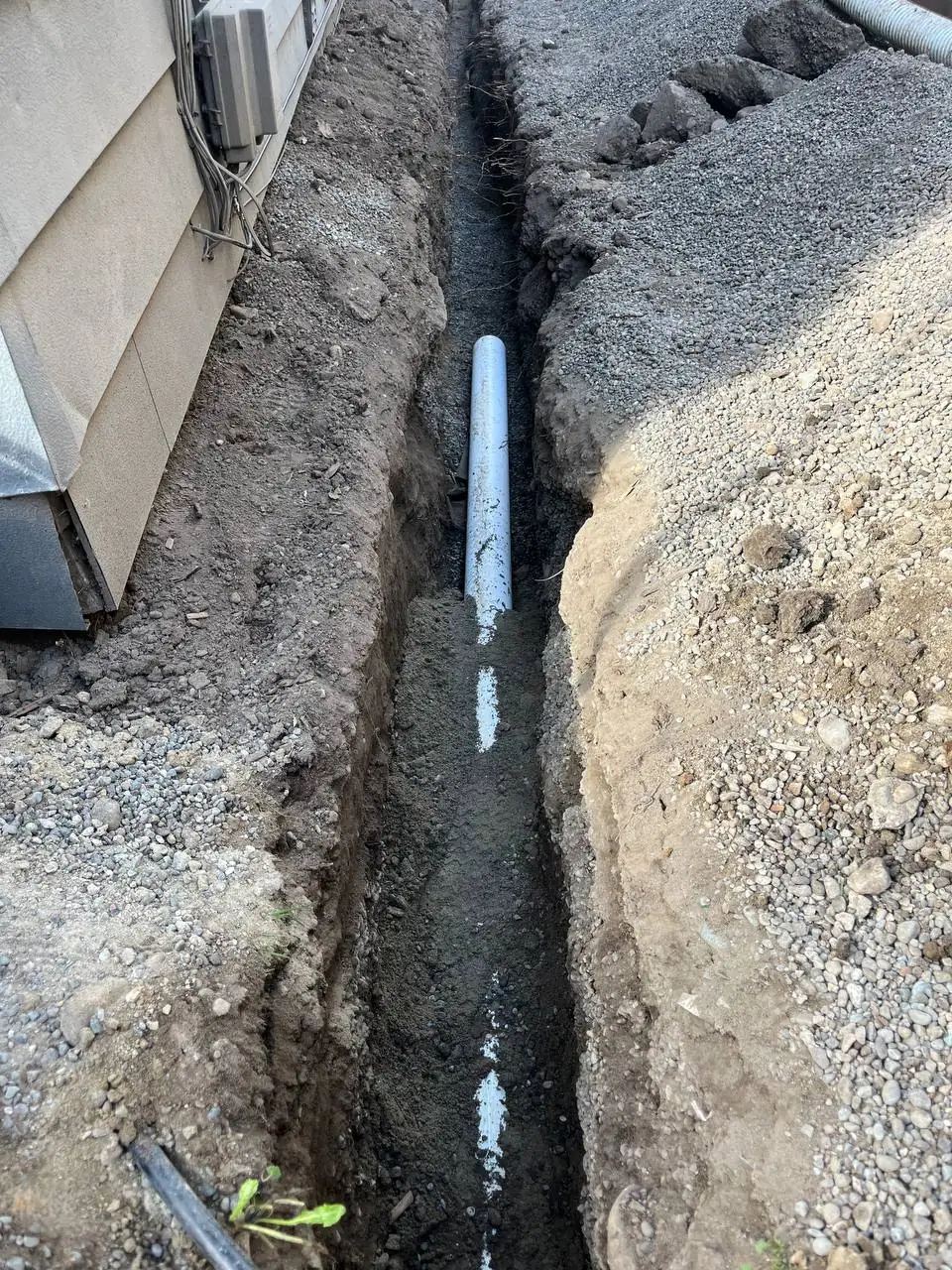
For persistent seepage, the most reliable approach is to give the water a path. We install a French drain along the footing, either outside in a trench or inside under the slab, and connect it to a sump basin or a gravity outlet.
On the walls, a dimpled membrane catches seepage and drops it into the drain before it reaches the room. Collected water is pumped or piped to a dry well or approved storm connection, away from the foundation.


How a Typical Project Runs
Every job follows the same sequence, so you know what to expect each day:
- Protect floors and finishes, and set up dust control.
- Saw-cut the slab or excavate along the wall.
- Trench to footing depth for the drain line.
- Fasten the wall membrane.
- Set pipe, rock and the sump or outlet.
- Restore concrete or backfill and clean up.
We walk you through the finished system before we leave.


Who You’re Working With
A Small, Family-Owned Crew
Basement Expert (Artbrick LLC) is a family-owned team based in Lynnwood. You talk to the people who do the work, get a straight assessment, and are never pushed into a bigger system than the house needs.
NDS-Certified Drainage Work
Our drainage designs follow NDS training: we look at how much water the site collects, where it flows, and how to relieve pressure on the walls before choosing pipe and outlets.
Dust Control Indoors
Interior work means cutting concrete. We seal off the work area and run HEPA air scrubbers and dust extraction so the rest of the house stays clean.
Builders and Commercial Projects
For new construction we coordinate with the general contractor so membranes, footing drains and sumps go in at the right stage, without holding up the schedule. We handle interior systems and exterior basement waterproofing, plus French drains and sump pumps.
Older Homes With Ongoing Water Problems
Houses built without proper drainage tend to show the same issues over time. Our foundation repair work covers:
- Replacing wood damaged by moisture.
- Sealing exterior cracks that let water reach the wall.
- Stabilizing a foundation that has settled or shifted.
- Finding the cause of shrinkage cracks before repairing them.
Not sure what you’re seeing? Book an inspection and we’ll explain it.
What Does a Typical Project Cost?
Price depends on access, depth and how much of the perimeter needs work. Small repairs, such as structural epoxy injection, typically run $600 to $4,000 per crack, while comprehensive exterior waterproofing systems for an entire perimeter typically range between $15,000 and $20,000 depending on excavation depth and accessibility. You get a written scope before any work starts.
Foundation Waterproofing in Redmond – FAQs
Answers to the questions Eastside homeowners ask us most.
Neighborhoods and Corridors We Serve
From our Lynnwood headquarters we run foundation waterproofing in Redmond daily—Education Hill, Downtown Redmond, and the Overlake corridor. Glacial till, clay, and seasonal groundwater show up as footing-joint seepage, not just floor dampness.
Nearby Cities
For finished-space floor seepage, see our finished-basement drainage page. Hub overview: waterproofing services across the region.
On sloped lots the uphill wall is buried deeper and collects groundwater moving downhill. The open, downhill side drains on its own. Drainage along the wet wall usually solves it.
For light dampness, yes. If water is pushing through under pressure, an interior coating will not hold; it needs a drain and an outlet.
Often. Original drains can silt up, get crushed by roots, or never have had a working outlet. We can camera-inspect or test them before recommending replacement.
Damp floor edges, white mineral deposits on the wall, musty smells, new or widening cracks, and puddles along the foundation after rain.
Wall length, depth to the footing, access for excavation, finished space inside, and the distance to a legal discharge point.
Standard Washington policies usually exclude gradual seepage. They may cover sudden events like a burst pipe, so check your own policy.
Till is dense and slow-draining, so water sits against the foundation. That is why we often pair a perimeter drain with a membrane on these lots.
Interior drainage and crack injection can be done year-round. Exterior excavation is easier in drier months, but we can schedule it in winter when needed.
We work across Redmond, WA, including the 98052, 98053 and 98073 zip codes, plus nearby Eastside neighborhoods.

