

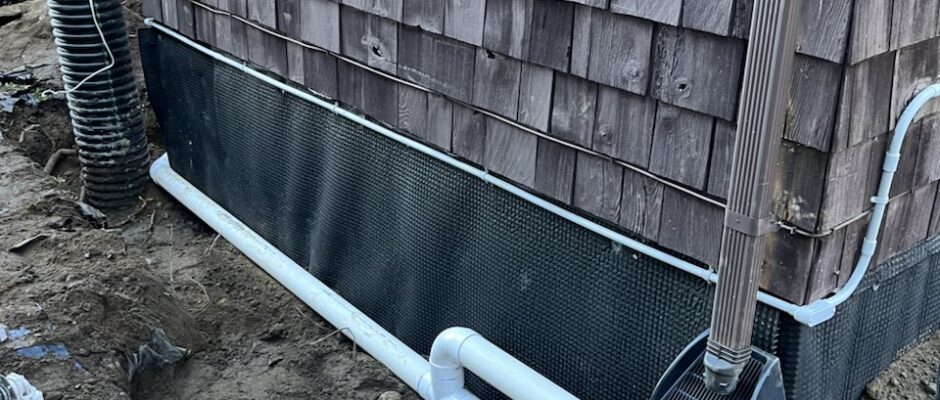
Yard & downspout drainage
- A large share of wet basements start on the roof — gutters dumping next to the footing overload the soil every winter.
- Carry downspouts several feet from the foundation on stable slope; fix negative grade and mulch piled against siding.
- Do not tie roof water into a perimeter drain without design — if the basement still wets after yard fixes, groundwater at the slab is the next question.
A huge share of wet basements start on the roof. If thousands of gallons from gutters hit soil next to your footing every winter, interior pumps fight a losing battle.
Grading red flags
- Soil slopes toward the house anywhere along the perimeter.
- Mulch or bark built up above the siding line.
- Settled porches or walks that pool water toward the foundation.
Downspout extension rules
Carry roof water at least several feet away from the footing on stable slope — farther on hillsides. Buried extensions are fine when they daylight downhill or tie into a designed storm system, not a random yard low spot.
Never tie roof water into perimeter drain blindly
Overloading a footing drain with roof volume can saturate the trench and increase wall leaks. Keep systems designed so each source has capacity and a clear outlet.
When yard work is not enough
If the basement still wets after gutters and grading are corrected, groundwater at the slab is likely. Then interior collection or exterior waterproofing enters the conversation.
What usually fixes it (and what does not)
Usually helps
- Downspout extensions and splash blocks on stable downhill slope
- Regrading swales that move surface water around the house
- NDS-designed yard drains with clear outlets — not mystery low spots
Often not enough alone
- Dumping roof water into footing drain without engineered capacity
- Mulch or soil built above siding line holding moisture on the rim
- Assuming yard work failed when the real issue is sub-slab groundwater
When to call a professional
- Basement still wets after gutters and grading were corrected.
- Hardscape, retaining walls, or tight lots complicate drainage routes.
- You need buried extensions that daylight downhill safely.
Fix roof and surface water first — it is the cheapest load to remove from your foundation.
Not sure what you are seeing? A site visit can map moisture paths and drainage before you spend on the wrong fix.

