

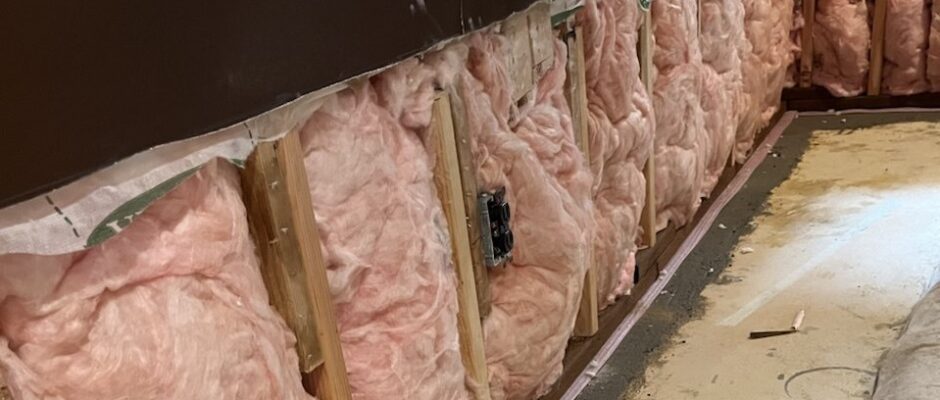
Mold vs. efflorescence on basement walls
- White powder that crushes dry and returns after rain is usually efflorescence — minerals left when water moved through concrete.
- Dark or fuzzy spots on dust, paper, or wood are mold — it needs moisture and proper cleanup scope if it spreads on structure.
- Different cleanup — same rule: stop the water path or both will come back next wet season.
White powder and dark spots on basement walls scare homeowners — for good reason. One is often mineral salt from water moving through concrete; the other is biological growth that needs a moisture source and proper handling.
White powder on concrete (efflorescence)
Efflorescence is dissolved mineral left behind when water evaporates through masonry. It crushes to powder when dry and often returns after rain if water still moves through the wall. It signals water movement, not necessarily toxic mold.
Dark spots and fuzzy growth
Mold needs organic food (dust, paper, wood) and moisture. It can be black, green, or white and may smear or feel fuzzy. Stains that grow across a wall after a leak season deserve inspection — especially on drywall or framing.
Health and air quality context
Any mold response should start with stopping moisture. Small surface areas on non-porous concrete may be cleanable; large areas on framing or HVAC-connected spaces belong in a remediation scope with containment.
What to do next
- Photograph and note location (wall vs. floor joint vs. ceiling).
- Fix gutter/downspout issues you can see outside.
- If powder returns in the same band after every storm, plan drainage investigation — not just scrubbing.
What usually fixes it (and what does not)
Usually helps
- Stopping exterior water with grading, downspouts, and drainage at the footing
- Proper remediation scope when mold is on framing or large drywall areas
- Cleaning small surface areas on concrete after the wall dries and stays dry
Often not enough alone
- Bleach on porous concrete or framing (see our FAQ on why it fails structurally)
- Painting over efflorescence without fixing the water path
- Ignoring spreading spots on drywall or HVAC-connected cavities
When to call a professional
- You cannot tell powder from growth, or the stain spreads after a wet season.
- Growth is on framing, insulation, or more than a small patch on concrete.
- Anyone in the home has respiratory sensitivity or immune concerns.
Efflorescence = water through concrete. Mold = living growth on a wet surface. Different cleanup — same need to stop the water.
Not sure what you are seeing? A site visit can map moisture paths and drainage before you spend on the wrong fix.

