

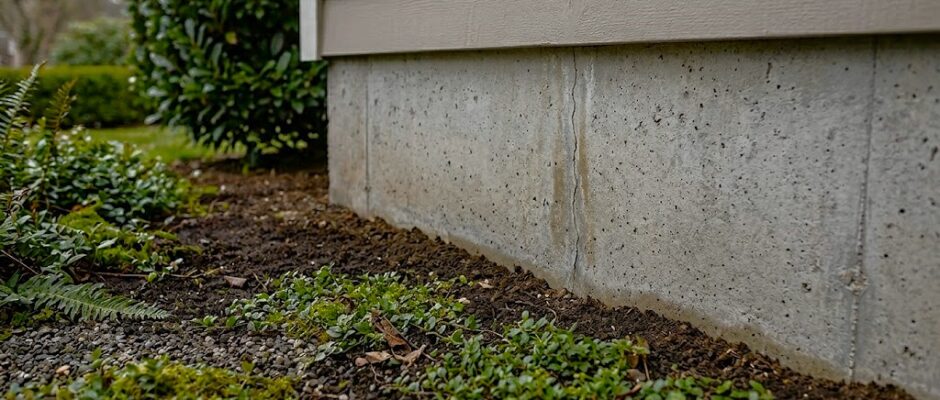
Foundation cracks: monitor or repair?
- Hairline vertical cracks in poured walls are common; horizontal, stair-step, or leaking cracks deserve a closer look in our wet soils.
- Before fall rains: mark crack ends with dated tape and measure width — growth means active movement, not just age.
- Repair matches the crack: injection for many leaking poured-wall cracks; carbon fiber or bracing when walls are bowing — not one product for every crack.
Not every foundation crack is an emergency. In the Puget Sound area, soil movement, freeze–thaw at grade, and seasonal water load change how cracks behave — what matters is direction, width, and whether it is moving.
Hairline vs. structural cracks
Hairline vertical cracks in poured walls are common after cure shrinkage. Horizontal or stair-step cracks in block, widening gaps, or cracks that leak every rain need closer look.
Before fall rains in Seattle
Mark crack ends with dated tape and measure width in fall and spring. New overlap on tape or width growth means active movement — not just old age.
DIY monitoring tips
- Check outside grade — soil piled against siding, missing downspout extensions.
- Note stuck windows or doors on the same wall as the crack.
- Photograph from the same distance and angle each season.
When injection or stabilization fits
Epoxy or polyurethane injection can address leaking cracks in poured walls when the wall is not actively bowing. Carbon fiber or bracing enters when inward movement is documented. Match the repair to crack type — not every crack gets the same product.
What usually fixes it (and what does not)
Usually helps
- Seasonal monitoring with dated tape and photos before spending on repair
- Exterior drainage and downspout fixes when cracks leak after rain
- Injection or stabilization matched to crack type and wall movement
Often not enough alone
- Filling every hairline crack “just in case” without movement history
- Interior sealers on block walls with active stair-step widening
- Ignoring sticking doors on the same wall line as a growing crack
When to call a professional
- Crack width grows season over season or leaks every rain.
- Horizontal, stair-step, or bowing-related cracking appears.
- You are buying or selling and need documented assessment.
A pro should classify active vs. dormant cracks and tie repair to whether water, soil load, or both are driving movement.
Monitor first when cracks are narrow and dry. Act when they leak, widen, or pair with bowing or sticking doors.
Not sure what you are seeing? A site visit can map moisture paths and drainage before you spend on the wrong fix.

