

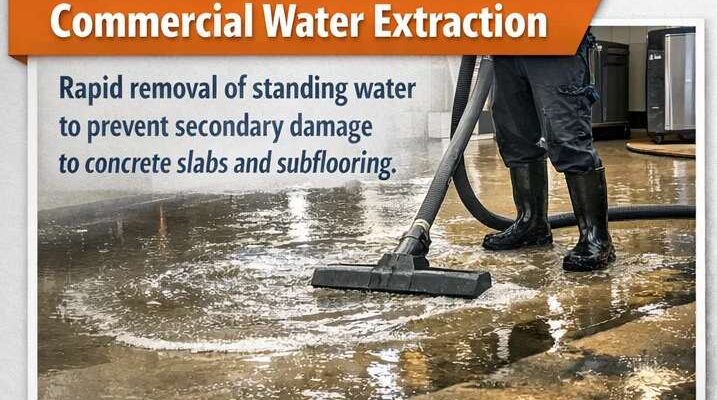
Water in a commercial building
- Pipe or sprinkler breaks usually hit one area at a clear time with cleaner water; groundwater often tracks rain, pits, and slab joints.
- Isolate unsafe zones, notify tenants with facts (not guesses), and preserve pump logs, CCTV, and maintenance records.
- Slab water that returns after rain, elevator pit flooding, or wall movement need documented assessment — not just extraction.
Water in a commercial building hits operations, tenants, and liability — not just a carpet in a rambler. Owners and facilities staff need fast triage and clear documentation.
Pipe and sprinkler vs. groundwater
Plumbing or fire-system breaks usually show on one floor with a clear event time and clean water (until it sits). Groundwater often tracks rain, affects low slabs and elevator pits, and may stain or seep at wall joints.
Business continuity basics
- Isolate affected zones for safety and electrical codes.
- Notify tenants with factual updates — avoid guessing cause.
- Preserve CCTV and maintenance logs for pumps and roof drains.
What to document on site
- Water depth, time discovered, weather history.
- Affected suites, equipment, and inventory.
- Photos of ceiling tiles, slab cuts, and exterior drainage.
- Who shut off water and when pumps ran (or failed).
When facilities need a pro team
Slab water that returns after rain, elevator pit flooding, or lateral foundation movement are not handyman scopes. You want moisture mapping, drainage design, and repair specs that tenants and insurers can follow.
What usually fixes it (and what does not)
Usually helps
- Clear cause classification: plumbing event vs. groundwater vs. roof drain failure
- Documented drying standards and moisture logs for insurers and tenants
- Engineered pit, slab, and perimeter solutions when rain drives repeat events
Often not enough alone
- Tenant-facing guesses about cause before data is collected
- Repeated extraction without fixing elevator pit or slab entry paths
- Delaying isolation of electrical and life-safety zones
When to call a professional
- Slab or pit water returns after rain — not just after a pipe repair.
- Multiple suites affected or operations cannot safely continue.
- You need specs and documentation for ownership, insurers, or lenders.
Commercial water events need cause classification, documentation, and a repair path that protects operations — not just wet-vaccing the carpet.
Managing a commercial property in the Puget Sound area? We can assess slab, pit, and perimeter water with documentation suited for facilities and ownership teams.

