

Foundation Crack Repair in Seattle
After wet weeks, damp lines along older wall openings often show up before doors start to rack



Map the opening, then check for active water and offset
Epoxy or polyurethane only when the crack type and goal match
Straps or other reinforcement when the wall is still moving
Fix drainage/discharge when hydrostatic load is feeding the crack
Licensed foundation and waterproofing contractor (Basement Expert / Artbrick LLC · ARTBRL*812B8). Public Works–trained processes where drainage is part of the scope.
Leak path first: how we separate seepage from displacement
Basement Expert handles foundation crack repair in Seattle when wall or slab openings leak, widen, or track with movement—inspection first, then injection or reinforcement matched to what we measure.
We also see damp lines after atmospheric-river weeks, hairline wall openings that start weeping, or stair-step patterns on older hillside basements. We do not treat every line the same.
Wet cycles push hydrostatic load against below-grade walls. A damp crack with no measurable offset is a different job than a dry crack with lip or progressive width change. We start by mapping location, measuring width/offset, and checking whether water is actively moving through the assembly—then we narrow repair class.
Some openings call for injection only. Others need straps or other reinforcement when progressive movement is present. When the right scope goes beyond localized sealing into broader stabilization, we hand off planning to our foundation repair hub so sequencing stays coherent.
We:
- Document photos and measurements, what they imply, and the next step
- Explain injection vs reinforcement in plain English—matched to observed behavior
- Coordinate drainage/discharge improvements when water loading is feeding the crack

Customer reviews (foundation work)


We’re proud of the reputation we’ve earned on real projects. For unfiltered feedback, start here: Basement Expert — Google reviews. Questions? Call (206) 388-7867.


Patterns that mean book an inspection this week
Not every hairline line is an emergency—but some patterns should be evaluated promptly.
- Horizontal cracks / inward lean: can indicate bowing and lateral load (often hydrostatic-related in basements).
- Openings wider than ~¼ inch (especially widening over time): can signal active movement—worth documenting and measuring.
- Sticking doors/windows across multiple openings: can indicate racking/settlement patterns.
- Stairstep cracking in brick veneer: often associated with settlement—evaluate whether it’s tracking with movement.
If you’re unsure whether to monitor vs repair now, the fastest path is an inspection. Noticing lines more in dry weather? See our summer crack-monitoring guide. For broader stabilization beyond localized treatment, ask during inspection how crack work sequences with piers or wall systems.
On-site sequence: map, measure, then choose the repair class
1. On-site crack inspection & documentation
We map crack patterns, note locations (walls/slab/joints), and capture moisture/movement clues so recommendations are tied to what we can observe—not assumptions.
2. Written scope + estimate
After inspection, you receive a clear written scope with repair class options (injection vs stabilization pathways) and pricing aligned to the verified conditions.
3. Scheduling & pre-work walkthrough
We schedule work around access constraints, protection of finished spaces, and dust control expectations—so the job sequence is predictable before we start.
4. Repair execution + quality checks
Repairs are executed to the agreed scope (e.g., injection protocols when appropriate, reinforcement when movement warrants it), with checkpoints before concealment/finishing steps.
5. Closeout documentation
You receive closeout notes relevant to your project (photos/scope summary as applicable) and warranty/program details as written for your specific repair.
What we refuse to do: seal over an active movement line
Cosmetic caulk over a widening or offset opening can hide the driver while water and movement continue. We separate stable, monitorable conditions from patterns that need a real repair class.
- Moisture pathways: even narrow openings can admit water that drives spalling, reinforcement corrosion, and interior damage.
- Progressive movement: widening, racking openings, or changing patterns usually mean document and act—not wait.
- Resale risk: buyers and inspectors flag foundation symptoms fast—clear documentation matters if you’re planning to sell.
If you’re seeing new cracking, widening, leakage, or movement symptoms, schedule an inspection so the repair class is confirmed before anyone seals anything—so you’re not guessing. We’ll explain what we think is happening, what we’d monitor vs repair, and what the next step looks like.
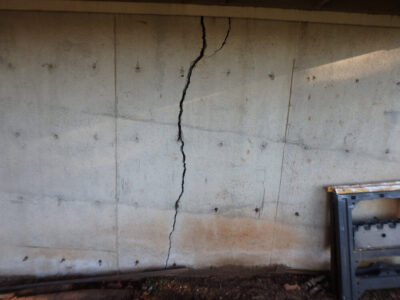
Hydrostatic load vs settlement: telling them apart on older basements
Most wall and slab openings are multi-factor: soil behavior, water, loads, and construction details interact—especially in wet PNW cycles. On hillside blocks (Queen Anne, Magnolia, Admiral District) we often see lateral load and drainage concentration; on flatter fill lots the story may lean more toward settlement and slab joints.
- Tree roots + soil moisture changes: landscaping can change moisture under footings—see tree roots and foundation stability.
- Differential settlement: uneven support stresses walls and slabs—see differential settlement.
- Seasonal drying/swelling: wet/dry cycles stress foundations—see summer soil desiccation risks.
- Drainage failure / hydrostatic loading: roof runoff, grading, or failed perimeter drains increase water loads against basement walls.
- Corrosion / spalling at older pours: moisture at steel can open adjacent concrete—see rebar corrosion and spalling.
We confirm whether a line looks active vs dormant before recommending injection-only vs stabilization.
Injection, straps, or drainage—decision points from the inspection
Inside, we look for damp staining, efflorescence, peeling finishes, and whether the opening is offset. Outside, we check grading, downspouts, and whether exterior lines track with interior ones. Door/window racking across multiple openings raises the odds that movement—not just a cosmetic hairline—is involved.
- Injection pathway: epoxy when structural bonding is the goal and the crack is dry/appropriate; polyurethane when water-stopping is the priority—see epoxy vs polyurethane.
- Reinforcement pathway: when walls are bowing or cracking progressively, straps or other stabilization may be required—see carbon fiber wall reinforcement.
- Slab-only openings: when the issue is mainly the floor, start with basement floor crack repair rather than forcing a wall scope.
- Water as the primary driver: if structure is stable but moisture keeps returning, we hand off to basement waterproofing or foundation waterproofing; perimeter discharge questions go to our french drain page.
What drives scope and cost (access, water, movement class)
Price follows verified conditions—not a generic “per crack” menu. Access constraints, whether water is active, whether movement is progressive, and whether drainage must be sequenced all change labor and materials. After inspection you get a written scope with repair-class options and pricing aligned to what we observed.
Ignoring coupled moisture/movement issues can increase long-term cost—see risks of ignoring foundation leaks. If you’re selling, selling a home with foundation repairs explains why documentation reduces buyer friction.
More depth reading: structural crack & settlement FAQ category.
FAQs: leak timing, repair class, and hillside quirks
These are the questions we hear most during inspections—answered with field facts, not slogans.
How do you tell a leaking crack from a moving crack?
We check for active moisture (damp staining, weeping after rain), measure width and lip/offset, and look for related racking at doors/windows. A wet line with no offset often points to a water-stop approach; measurable displacement or progressive width change points toward stabilization planning.
Does every wet crack need polyurethane instead of epoxy?
No. Polyurethane is often preferred when water-stopping is the goal in damp conditions; epoxy is typically for structural bonding when the crack is appropriate and dry enough. The inspection chooses the class—we don’t default to one product for every opening.
When does a wall crack mean carbon fiber, not just injection?
When the wall shows bowing, horizontal patterns tied to lateral load, or progressive movement that injection alone won’t restrain. In those cases we discuss strap reinforcement options as part of a sequenced scope—not as a bolt-on upsell.
What should I photograph before the inspection?
Wide shots of the full wall/slab, close-ups with a ruler or coin for scale, any damp staining after rain, and exterior grades/downspouts near the same elevation. Date-stamped photos help us see progression if you’ve been monitoring for weeks.
How do wet seasons change monitor-vs-repair timing?
Storm weeks can make dormant lines weep and make active ones worse. If moisture returns every atmospheric-river cycle, or width grows across a season, waiting usually expands scope. If a dry hairline stays unchanged across wet and dry months, monitoring with photos may be reasonable until something changes.
Service areas
We handle crack diagnostics and repairs across Greater Seattle neighborhoods—Queen Anne, Ballard, Magnolia, West Seattle, Beacon Hill, Columbia City, Green Lake, and nearby King/Snohomish communities where basement moisture and soil movement drive openings.
Nearby crack-repair pages (same service line):
Broader stabilization beyond localized treatment: foundation repair hub. Confirm routing for your address when you schedule.

