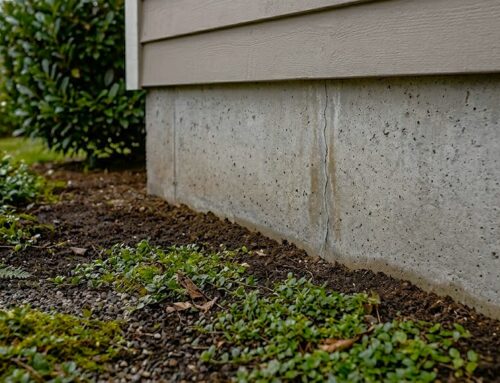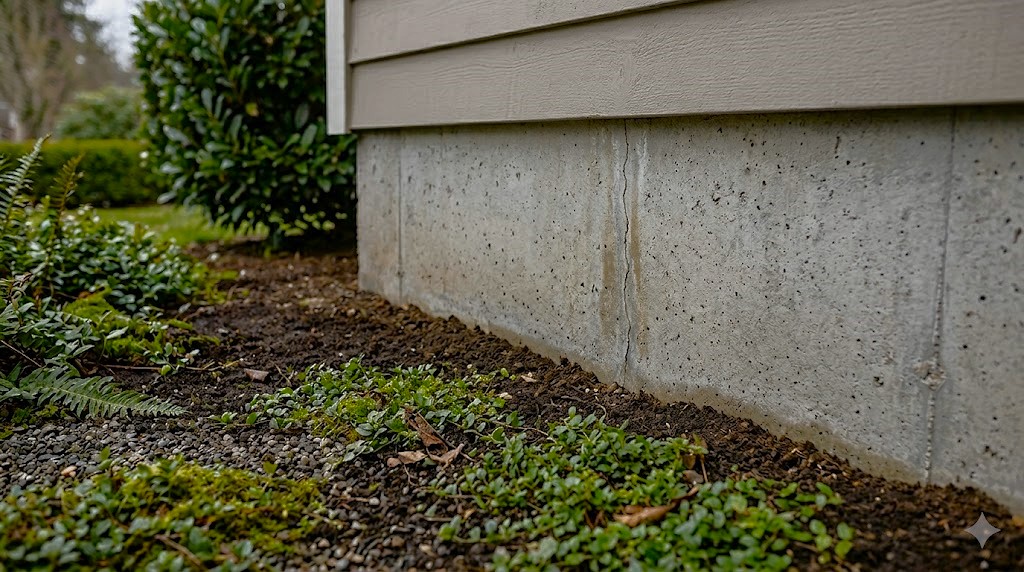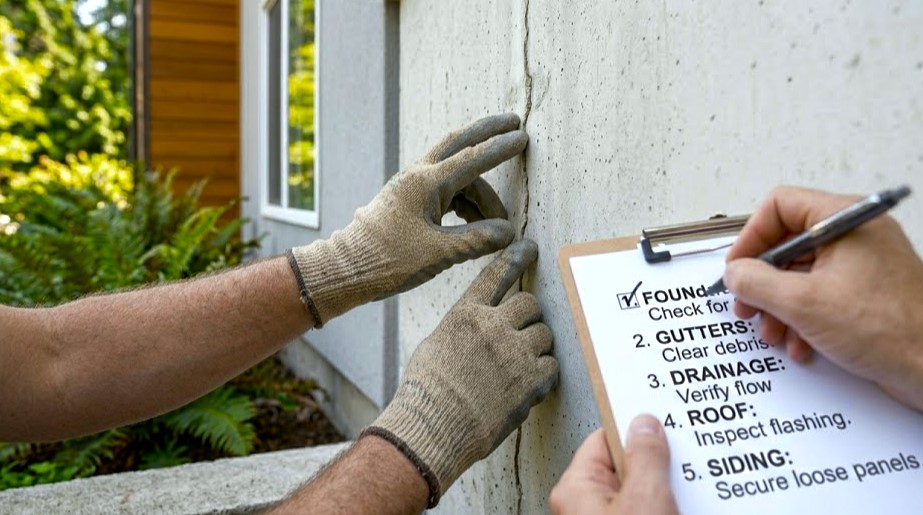
Seattle homeowners often notice foundation cracks in summer, then wonder what to do before wet-season pressure returns. This checklist helps you document what you’re seeing, spot higher-priority warning signs, and decide when to schedule an inspection.
The goal is simple: move from guessing to evidence-based decisions before fall rains increase hydrostatic loading.
How to use this checklist
- Walk the same areas each time (inside and outside).
- Take clear photos with dates (same angle if possible).
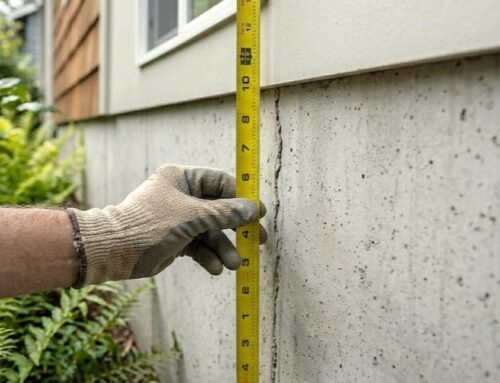
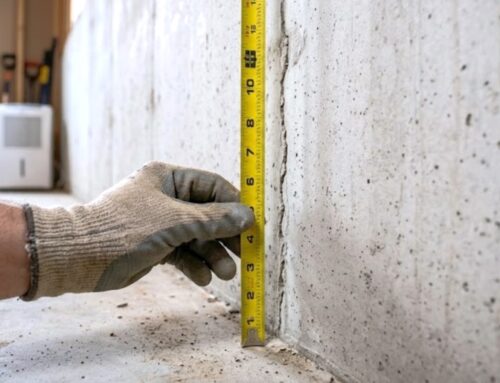
- Note changes in crack width, length, staining, and nearby symptoms.
- If signs of progression appear, schedule an inspection rather than waiting for storm-season escalation.
Pre-fall crack checklist (Seattle homes)
1) Crack pattern and location
- Do you see new cracks since early summer?
- Are existing cracks wider or longer than before?
- Do cracks appear in higher-risk patterns (horizontal, stair-step masonry, linked cracking)?
2) Moisture clues at/near cracks
- Efflorescence, damp lines, or staining near crack paths?
- Any repeated seepage after rain events?
- Musty/damp zones that correlate with specific wall sections?
3) Movement indicators inside the home
- Doors/windows sticking or racking across multiple openings?
- New separations where walls meet ceilings/floors?
- Uneven floor feel or new slope/trip points near slab joints?
4) Exterior drainage and discharge checks
- Downspouts discharging too close to foundation lines?
- Low spots or grading that trap water near basement walls?
- Drainage components blocked, disconnected, or undersized?
5) “Act now” triggers before rainy season
If one or more of these appears, an inspection is usually the productive next step:
- Cracks widening or re-opening in a short interval
- Recurring moisture evidence tied to crack lines
- Horizontal/near-horizontal cracking with any inward lean
- Multiple movement symptoms appearing together
What to document before calling
Good documentation helps speed up a clear inspection outcome. Capture:
- Photo set with dates and approximate locations
- Any known timeline (“first noticed,” “changed after storm,” “reopened after repair”)
- Related symptoms (doors/windows, moisture recurrence, slope/separation clues)
- Recent property changes (grading, landscaping moisture shifts, plumbing issues, remodel loads)
Where this checklist fits in your next decision
This checklist doesn’t replace inspection—it helps you decide whether your pattern looks more like monitor or repair planning before fall rains raise risk.
- Summer context page: Seattle summer foundation cracks guide
- Seattle crack service detail: Foundation Crack Repair in Seattle
- Timing strategy article: Should you fix cracks before rainy season?
- Mechanism reference: Active vs. dormant cracks
Need a timing decision before fall rains?
If your checklist shows progression, moisture coupling, or movement indicators, schedule an inspection now so your next step is based on verified conditions.
Call (206) 388-7867 to schedule a foundation inspection.